

By Princess Gloria Adebajo-Fraser MFR
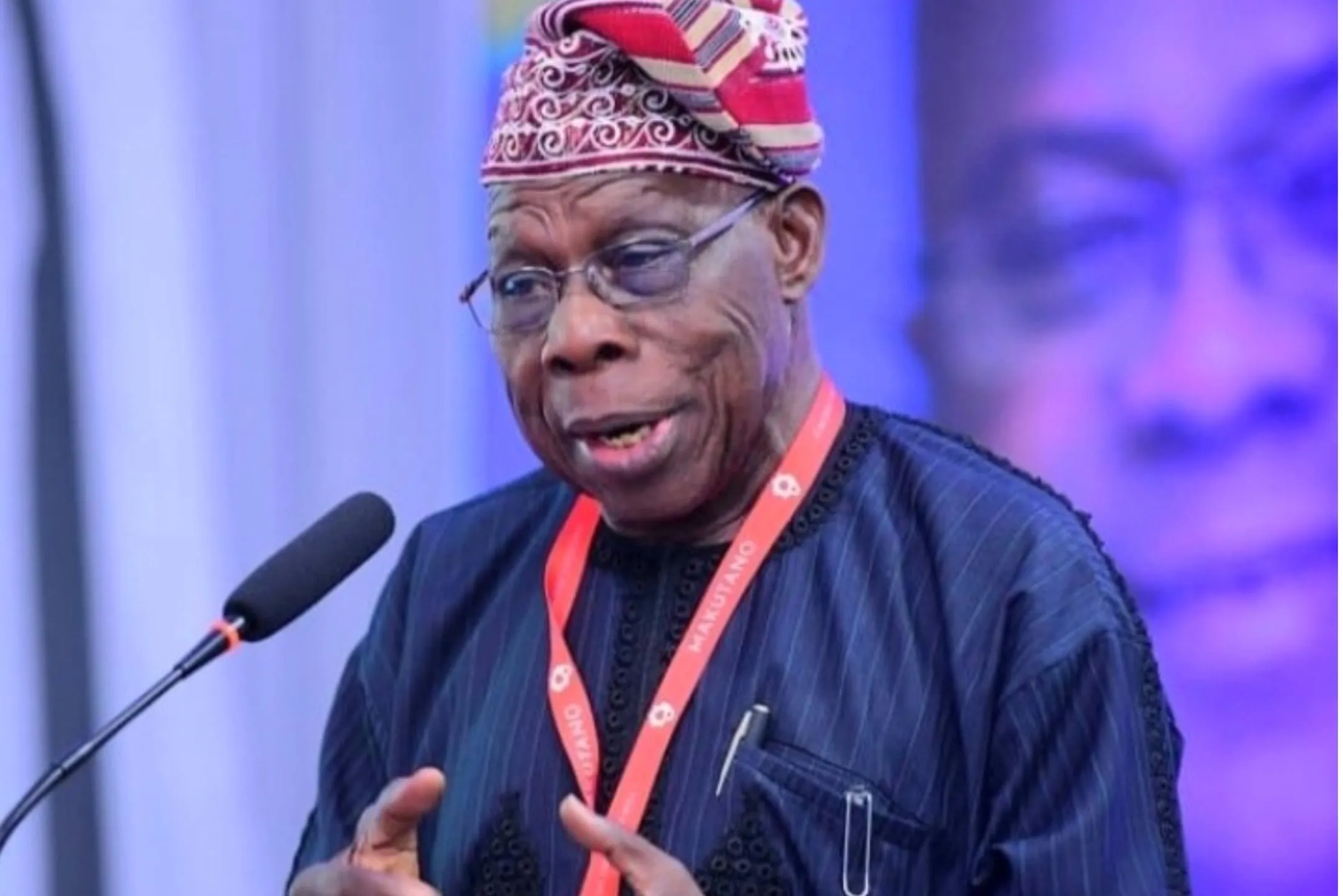
Former President Olusegun Obasanjo has delivered a sweeping and uncompromising rebuttal to former Ogun State Governor, Chief Olusegun Osoba, rejecting allegations that he deceived the Alliance for Democracy (AD) and Afenifere leadership in the build-up to the 2003 general elections while unveiling fresh details of the political calculations, alliances and power struggles that shaped one of Nigeria’s most consequential democratic transitions.
In a strongly worded open letter dated July 23, 2026, Obasanjo described Osoba’s account, published in The Legal Observer under the title “How Obasanjo Deceived Us in 2003,” as inaccurate, incomplete and far-fetched, insisting that many of the critical decisions taken during that era were beyond the knowledge of the former governor.
“There were issues you did not know or understand because, as you pointed out, they were above your head. They were handled by your elders in Alliance for Democracy and Afenifere,” Obasanjo wrote, taking particular exception to Osoba’s description of him as deceitful.
“I deceived nobody,” the former President declared. “I always presented my case and all issues as I had them and as I understood them.”
The letter is one of Obasanjo’s most detailed personal accounts of the political negotiations that preceded his election in 1999 and the events that culminated in the dramatic political realignment of 2003, when the Peoples Democratic Party (PDP) dismantled the AD’s dominance across the South-West, leaving only Lagos State in opposition hands.
Recounting events following his release from prison, Obasanjo disclosed that he initially had no intention of returning to politics, saying his immediate concern was rebuilding his family life and attending to his children’s education. According to him, persistent appeals from respected Nigerians eventually persuaded him to reconsider.

He revealed that separate delegations led by Lawan Katsina, Chief S. M. Afolabi and Martins Kuye visited him at his Ota Farm to encourage him to contest for the presidency. Rather than accepting immediately, he said he embarked on wide-ranging consultations across Nigeria.
Among those he consulted were Chief Bola Ige, Chief Richard Akinjide, Chief Akinloye, Professor Oyeleye, Sunday Awoniyi, Adamu Ciroma, Professor Anezi Okoro and Ambassador Arthur Mbanefo.
According to Obasanjo, those consultations convinced him that Nigeria required national leadership rather than sectional politics, a conviction that ultimately influenced his decision to join the PDP instead of the Alliance for Democracy.
One of the most revealing sections of the letter concerns his relationship with the late Chief Bola Ige.
Obasanjo recalled that shortly before the presidential election, former United States President Jimmy Carter visited Nigeria to encourage peaceful elections and met leading presidential contenders at the Sheraton Hotel in Ikeja.

As he entered the meeting venue, Obasanjo said he encountered Bola Ige leaving.
“I asked, ‘Bola, have you done the fence-mending for me?’ He replied, ‘We will meet in the field.’ We never met in the field. That was above your head.”
The former President cited the encounter as evidence that several high-level political engagements occurred outside the knowledge of many governors and party officials, including Osoba.
Obasanjo also defended his repeated visits to the late Chief Abraham Adesanya despite being told repeatedly that the Yoruba would not vote for him.
He said politics should never be driven by bitterness, stressing that although Adesanya consistently opposed his presidential ambition and urged him to join the AD, he continued to visit him out of respect.

“I have never believed in tribal politics,” Obasanjo wrote, arguing that national unity must always take precedence over ethnic political interests.
Reflecting on his first term in office, the former President rejected suggestions that his outreach to the South-West reflected political weakness.
Instead, he argued that inviting opposition figures into government formed part of a deliberate strategy to bring the Yoruba political establishment into the national mainstream after years on the political periphery.
According to him, immediately after assuming office, he appointed defeated PDP governorship candidates from the South-West into federal positions and began cultivating relationships across party lines to prepare the ground for broader national acceptance.
He cited his engagement with prominent AD figures, including the late Mrs. Mobolaji Osomo, as part of that reconciliation effort, insisting his objective was always dialogue, accommodation and national cohesion rather than political domination.

As the letter progresses, however, Obasanjo moves beyond reconciliation into explosive allegations surrounding impeachment plots, presidential succession plans and the dramatic political events that transformed Nigeria’s political landscape ahead of the 2003 elections.
Obasanjo devoted a substantial portion of his letter to disputing Osoba’s suggestion that his administration depended on the six Alliance for Democracy (AD) governors in the South-West for political survival.
The former President argued that such a proposition defied political logic, noting that at the time his government enjoyed the support of 21 Peoples Democratic Party (PDP) governors and nine All Peoples Party (APP) governors, in addition to commanding a majority at the federal level.
“It would be ridiculous,” he suggested, to believe that six opposition governors could dictate the direction of a government backed by such overwhelming political numbers.
One of the most explosive sections of the letter centres on Obasanjo’s account of an alleged impeachment plot during his first term. According to him, the effort did not originate from the opposition but from within the Presidency itself.
He alleged that his then Vice President, while he was away from the office one Friday, met with then Speaker of the House of Representatives, Ghali Na’Abba, to encourage impeachment proceedings against him. Obasanjo further claimed that intelligence reports available to his Chief of Staff indicated financial support was provided to begin the process. He maintained that he treated the alleged plot with contempt because, in his view, he had committed no impeachable offence.
These claims represent Obasanjo’s personal recollection of events and are likely to reignite debate over one of the most turbulent periods of Nigeria’s Fourth Republic.
The former President also rejected claims that he authorised any political arrangement under which the six AD governors would remain unchallenged in the 2003 elections in exchange for support for a future presidential succession. According to him, such discussions, if they occurred, were never initiated or endorsed by him.

Instead, he argued that those who promoted the idea misled the AD governors, insisting that he neither negotiated nor approved such an arrangement.
Turning to the 2003 elections themselves, Obasanjo maintained that the outcome reflected political realities rather than betrayal. He claimed that five of the six AD governors were defeated through legitimate electoral competition, while alleging that only one South-West state experienced manipulation of election figures. He also criticised the campaign strategy of some AD leaders, asserting that organisational weaknesses and ineffective mobilisation contributed significantly to their defeat.
Throughout the letter, Obasanjo repeatedly returned to the principles he said guided his political life: dialogue, reconciliation, humility and national integration.
“I have never believed in tribal politics,” he declared, arguing that politics should be about ideas, public welfare and national progress rather than ethnic loyalties or permanent political hostility.
Despite the sharp tone of his rebuttal, Obasanjo ended the letter on a conciliatory note. He acknowledged Osoba’s role in allocating the land on which the Olusegun Obasanjo Presidential Library (OOPL) now stands in Abeokuta, describing the project as a landmark for Ogun State and expressing gratitude for what he called a lasting contribution to the state’s development.
He also urged Osoba to embrace humility, thanksgiving and reconciliation, reminding him that political contests eventually pass but personal relationships can endure for life.
The exchange between the two elder statesmen has reopened one of the most contested chapters in Nigeria’s democratic history. Beyond the personal disagreement lies a broader debate over how the events leading to the collapse of the AD’s dominance in the South-West should be remembered and interpreted.
While Obasanjo’s letter provides a rare first-person account of the consultations, alliances and political calculations that preceded the 1999 and 2003 elections, many of its most consequential assertions—including those relating to the alleged impeachment plot and political succession arrangements—remain his account of events. As with many episodes in Nigeria’s political history, some participants have offered differing recollections over the years.
What is beyond dispute, however, is that the political realignment of 2003 fundamentally reshaped the South-West and altered the trajectory of Nigeria’s Fourth Republic. The elections marked the end of the AD’s regional dominance, strengthened the PDP’s national reach and demonstrated the fluid nature of political alliances in a young democracy.
Nearly a quarter of a century later, Obasanjo’s detailed intervention ensures that the arguments over that defining period are far from settled. More than a defence of his personal legacy, the former President’s letter is an attempt to place his version of history on the public record.
Whether history ultimately vindicates his account or favours competing narratives, one conclusion is inescapable: the battles that shaped Nigeria’s democratic evolution did not end at the ballot box. They continue to be fought in memoirs, interviews, public letters and the court of public opinion, where history itself remains contested.
The National Patriots believes former President Olusegun Obasanjo’s letter underscores the importance of preserving Nigeria’s democratic history through documented facts and open dialogue. While differing accounts of past political events are inevitable, history should be debated with evidence, mutual respect and national interest. Democracy is strengthened when disagreements illuminate the past without undermining the institutions that sustain the nation’s future.
Princess Gloria Fraser MFR.
Special Adviser to Former President Goodluck Jonathan.
Special Assistant to Former President Olusegun Obasanjo.
President, The National Patriots.
SUBTITLE
BREAKING: You lied, Obasanjo tells ex-Governor Osoba
…says what happened in 2003 was beyond Osoba’s understanding
Former President Olusegun Obasanjo, on Thursday afternoon, fired back at Aremo Olusegun Osoba, former governor of Ogun State, for reportedly saying the ex-President deceived the governors of the Southwest (on the platform of the Alliance for Democracy).
Obasanjo took serious exception to Osoba calling describing him as a deceit. According to Obasanjo, many things that happened during that period were beyond Osoba’s comprehension.
In a letter to Osoba, Obasanjo recalled his journey to becoming Nigeria’s President. In one of the paragraphs, he said: “Before we went into the election, President Jimmy Carter visited Nigeria to ensure peaceful election in Nigeria, he met Presidential hopefuls in Sheraton Hotel in Ikeja. As I was going in, Bola Ige was coming out. I asked, “Bola, how now? I met you in Ibadan and you said that there would be fence-mending to do. Have you done the fence-mending for me?” He said, “We will meet in the field”. We never met in the field. That was above your head.”
Read the full letter below:
————————————-
July 23, 2026
Chief Olusegun Osoba,
Former Governor of Ogun State,
No. 1, Ataba Close,
Ibara Housing Estate, Abeokuta.
REPLY TO YOUR INACCURATE POSTURE: “HOW
OBASANJO DECEIVED US IN 2003”
There are many things you got wrong and many things you omitted advertently or inadvertently in your write-up carried in The Legal Observer of July 20, 2026. Your presentation in your write-up was farfetched to put it mildly.
But Before I go further, I take strong and serious objection to your calling me a deceit because I deceived nobody. I always presented my case and all issues as I had them and as I understood them no matter whose ox is gored. There were issues you did not know or understand because as you pointed out, they were above your head. They were handled by your elders in Alliance for Democracy (AD) party and Afenifere. And there were issues that you governors of the South-West kept away from me which normally should be discussed or raised with me but were raised or discussed somewhere else. I would not say that you were diabolical or deceitful. You chose what you would do and you did what you chose. Others could also choose differently.
On my being released from prison, for us to start from that point, many people came to congratulate me and started insinuating that I should have a role in government again. I paid no attention initially because I had serious family matter: my children’s schools to attend to.
Sooner, groups started to call on me to directly invite, not just to insinuate. The first group was led by Lawan Katsina to me on my Ota farm. I received them, thanked them and promised to think about their invitation. The second group was led by Chief S. M. Afolabi who was Deputy Governor to Chief Bola Ige. The third group was led by Martins Kuye. The last two groups were Yoruba-led and I told them that the circle needed to be widened and enlarged. I believed that the two groups included Afenifere and non-Afenifere. You did not know that I had these approaches, contacts or invitations.
With these approaches, I decided to consult in South-Wet, East and North. In the South-West, my first call was Ibadan to consult Chief Akinloye, Chief Bola Ige, Chief Richard Akinjide and Professor Oyeleye. In the North, I consulted two close friends, Sunday Awoniyi and Adamu Ciroma. In the East, I consulted Professor Anezi Okoro and Arthur Mbanefo. That quick consultation was like sounding board. It gave me a quick and a good feel.
From that sounding, I decided to take interest in what was going on in Party formations and the special role that Bola Ige was playing at that time. Peoples Democracy Party (PDP) attracted my attention and my interest and I was being regularly posted. After the formation of the Parties, I formally joined PDP. I continued my consultation and campaigns at the same time.
For me, politics is for welfare and well-being of people and there should be no personal bitterness or acrimony in it. And if you do not do my politics or play my own way, that should not lead to hatred, enmity or antagonism. It is a matter of ideas, policies, competition and choice. While competing with Alex Ekwueme, I was a guest in his house when I went to Anambra to campaign for primary to be candidate of PDP for the presidency. We ate together and the following morning, I went out to campaign. When I told him that I would repair the road to his settlement when I became President, he retorted that what he could do by himself, he would not give to someone else to do for him. We laughed it off.
On three occasions, I visited Chief Abraham Adesanya and on the three occasions, he vowed that the Yoruba would not vote for me. I never stopped calling on him to report and to campaign. He asked me to join AD and I told him that AD as essentially a tribal party was in a cul de sac. But as a Yoruba boy born and bred well, I must give respect where it is due and let go. And that was done. I must say that there was no time I called on Papa Adesanya in his Apapa resident that I was not well entertained. He made sure that his daughter was around to entertain us. Yet Papa stood on no vote for me and I stood on my respect and what was due to him. Aremo, I wonder how much of that you knew. Otunba Fasawe accompanied me on each visit and he listened to my prayers.
Before we went into the election, President Jimmy Carter visited Nigeria to ensure peaceful election in Nigeria, he met Presidential hopefuls in Sheraton Hotel in Ikeja. As I was going in, Bola Ige was coming out. I asked, “Bola, how now? I met you in Ibadan and you said that there would be fence-mending to do. Have you done the fence-mending for me?” He said, “We will meet in the field”. We never met in the field. That was above your head.
The elections came, PDP won 21 State governorships in other parts of the country less Yoruba land. And at the presidential, almost 63 per cent of the votes were cast for me. But not much votes for me from Yorubaland. I believe that in politics as in life, you must never stop communicating and widening your circle of friends and loved ones: turn adversaries to neutrals, and turn neutrals to friendly. That is part of my own philosophy in politics and in life. After all, life is so short, I rather make friends than enemies and live in love with godliness and integrity to serve humanity and God. Bringing PDP and AD to join me for a sort of national government was not out of weakness rather, it was out of strength and the unity and progress of the country. And anyone who saw that as coming from weakness or being in a political trouble would be mistaking.
As soon as we came into government, the first thing I did was to place all South-West PDP gubernatorial candidates in appointments at the centre since they were all woefully defeated and we were warned and we saw it coming. And it came. That it came was not the main thing, it was how we handled it. I called a meeting of the defeated governorship candidates. I said, “Our people, the Yoruba, did not vote for us. Next time I want them to vote for us and that we begin now”. Some of the defeated governorship candidates were trying to make excuses. I said that it was not time for excuses, but time for action. I told Dr. Segun Agagu that I was going to start from his State, Ondo State. And the first AD stalwart I invited for discussion was Mrs. Mobolaji Osomo who happened to be a fellow poultry farmer with me earlier. My position was simple, “The Yoruba had been in the periphery for so long, let them come to the mainstream, at least they would know what is going on”. I then asked Mrs. Osomo to join us. She did not hesitate. I asked, what could I do for her, and she said that I had honoured her enough by asking her to come on the mainstream. That was one of the excises that took place, during my first term in the South-West either known or unknown to you, Aremo.
I visited States, some twice, during my first term, no matter under which political party platform the State was governed. It was in the process of learning and making friends. And friendships cultivated that ways last. You talked of ‘stoop to conquer’. Even in my own relationship with you as my State Governor not belonging to my political Party, you would remember that I normally called on you when I visited home. Of course, you called back on me. I believe that eniti ko kini kuule, o padamu e kaabo. But others could say they are presidents and they should be visited first, I don’t believe in that. It is all part of stooping to conquer in life for good leadership as far as I am concerned.
Some Yoruba elders and Obas undertook advocacy on their own and not because I sent them. And those who did that I knew, I thanked them. And many did that across the country for national progress. And that takes me to Na’Abba’s impeachment you glowingly talked about. And the way you wrote about it, talking about remorse would suggest stack ignorance on your part or being an accomplice. And both were possible. Na’Abba’s impeachment began at the presidency by the Vice-President, who on a Friday when I was out of the office, invited Na’Abba to his office and convinced him as he had convinced himself and some others but of insignificant number that I should have only one term as Presidente and this was the act of a man I brought up from governorship to Vice-President. From the first day as Vice-President, he raised campaigners for his presidency. On the Friday, he invited Na’Abba, he gave him 5 million naira to begin his impeachment work. It was all noted, recorded and reported to me by my Chief of Staff, a professional intelligence officer. The game continued to be played on with me treating it with contempt as I have committed no impeachable offence except my Vice-President who wanted to take over by hook or by crook. It was President Shagari who, on his own volition, asked me about impeachment and I told him that for me, there was absolutely nothing in it. He requested for my permission to handle it and, of course, I gave him the go-ahead. Aremo Olusegun Osoba, please show me what you will be remorseful for if you were in my position.
Former Governor Segun Osoba, let me remind you of the political situation in which you created or seemed to see created a monumental “political upheaval” that I would see the six Governors of AD in the South-West to extricate me out of, that could not be done by 21 PDP Governors plus the 9 APP Governors. And could not be done by my PDP and APP if you would pull AD which was also in my government politically. Of course, whatever you need to adorn yourself would be understandable. But I stood and I continue to stand for communication, dialogue and love and harmony and widening and deepening of friendship and fellowship. These are good character, traits and I will hold unto these attributes till end of life.
My dear brother Olusegun Osoba, I don’t know what would best describe what you claimed was presented to me on my farm with Egbon Ayo Adebanjo leading: hyperbole, presumption, disregard, takeover or what? Could you agree to such effrontery. Six to dictate to thirty is ridiculous. I had an Executive Council, I had a National Assembly, I had a virile political Party, 21 Governors and 9 other Governors from another party with my government and it was AD and Afenifere that would have to dictate to me what my government would have to do. I had a programme that we were steadily implementing. I would not say that you could not say all those things, but I may listen and in politeness not answer back but you should know I would not accept such dictation if you presented it. For you to present such to me was to grossly underrate me. It was the second time. Before the swearing-in, I was invited to Papa Onasanya’s house in Surulere. When we got there, we met about five AD/Afenifere stalwarts waiting. Papa Onasanya invited me into the room alone and asked, “What do we do with Yoruba President?” I screamed and said Nigerian President must not be trivialised by tribalising it.
There is one thing more that you may need to be reminded in the AD Governors and my Vice-President honeymoon. When he failed in the impeachment exercise, he made a two-track approach: one to go with Alex Ekwueme and Alex to hand over to him in the third year of his presidency; second is for the six AD Governors of South-Weste not to have competition from any other party in 2003 so that in 2007, you would all yield the field to my Vice-President. You were all convinced of this anti-democratic plan and you all fell for it. I was told that I was said to be selling the idea and if that was said of me, it was a lie. Aremo, such was sold to you: an idaro. And none of you thought it fit to check with me, or I was not worth checking with, since I was not a nominee of AD/Afenifere. Have no dealing with Obasanjo as President but deal with his Vice-President and you would get the best that was clever political move. I should remind you that you were the one who told me how late Shehu Yar’Adua nearly turned you over in Abeokuta, your constituency in the days of SDP and you had to use unorthodox other means to get over Shehu. Papa Ajasin told me similar story about Shehu during the same SDP period. Shehu with all due respect was my protege. Whatever Shehu could do, his mentor could do as well if not better. Your loss or defeat in 2003 was genuine in all the six States except the one where the figures were successfully and murderøusly changed as Chief Tinubu, the Head of Service in Lagos State then, accurately reported to me. I took it as what God allowed. From information that reached me from the political field, you barely campaigned and at the tail end of the campaign, you went on TV to apologise to the people for your arrogance and informed them that the starch in your agbada caused your arrogant appearance. The brisk movement through South-West by PDP on Thursday before the Saturday election in 2003 was incomparable and successful. There were lessons to learn on both sides. I learn the lesson of whether the other side is right or wrong, there should be no bitterness and there should be accommodation and tolerance. Afenifere and its political party never rose beyond tribal cul de sac. There is lesson for all in that. And it would appear that once you were not an AD or Afenifere member, you would be a liar or a deceiver. If you failed to follow my line, you must be maligned and set out as an enemy. I have never believed in tribal politics.
I sympathised with some Afenifere leaders who died with regret as they expressed to me before they died – Chief Gani Daudu, Chief Abraham Adesanya, Chief Ayo Adebanjo. I was close to some of them before they died. What they cherished, taught, believed and practised were not what their proteges accepted, believed and practised. Afenifere and what they stood for would not congratulate me when I came out of prison or when I became President. Did it mean anything to me? No. I did not even know of it until I was told that they held a meeting of Afenifere to decide such pettiness. How mean! Well, God answered my prayer that I was not too far away from the death bed of some of them as Yoruba elders. I thank God that I did what I could to show no bitterness, hard feelings or lack of appreciation to God.
Aremo, going through your Afenifere experience and all what God has done for you and where you are today, you have lessons to learn: you have many things to understand and you have thanks to give to God and to give men and women. And finally, it is not over until it is over and there is no end to humility and thanksgiving. You were overwhelmed with your own interests, not to look at or consider others. In politics, no one should be ignored or disregarded and politics may end, relationships may live till life’s end. But let me remind you, the interactions that were not to the best of my knowledge influenced by party political affiliation or card. I wanted Governors to acquire land in Abuja and build houses. Party consideration was not involved. You were driven to believe as a I believed also that it was necessary to develop Abuja. I remember that when you developed Osoba Hilltop and took me to show me the plot you wished to allocate to me to form a circle with the one for you and for Chief Shonekan and I shouted about price, you reminded me that when I pushed you to Abuja, you paid significantly for it.
But the greatest service you rendered for me and for Abeokuta is the land allocated by you for Olusegun Obasanjo Presidential Library, OOPL. It has become the most significant landmark in Abeokuta. All of us in Abeokuta thank God for that landmark, thank you and thank God for your life. The allocation was made for the good of my programme and in the best interest of Abeokuta and indeed Ogun State with little money paid by me. There was neither politics played nor any game in the process.
OLUSEGUN OBASANJO




