

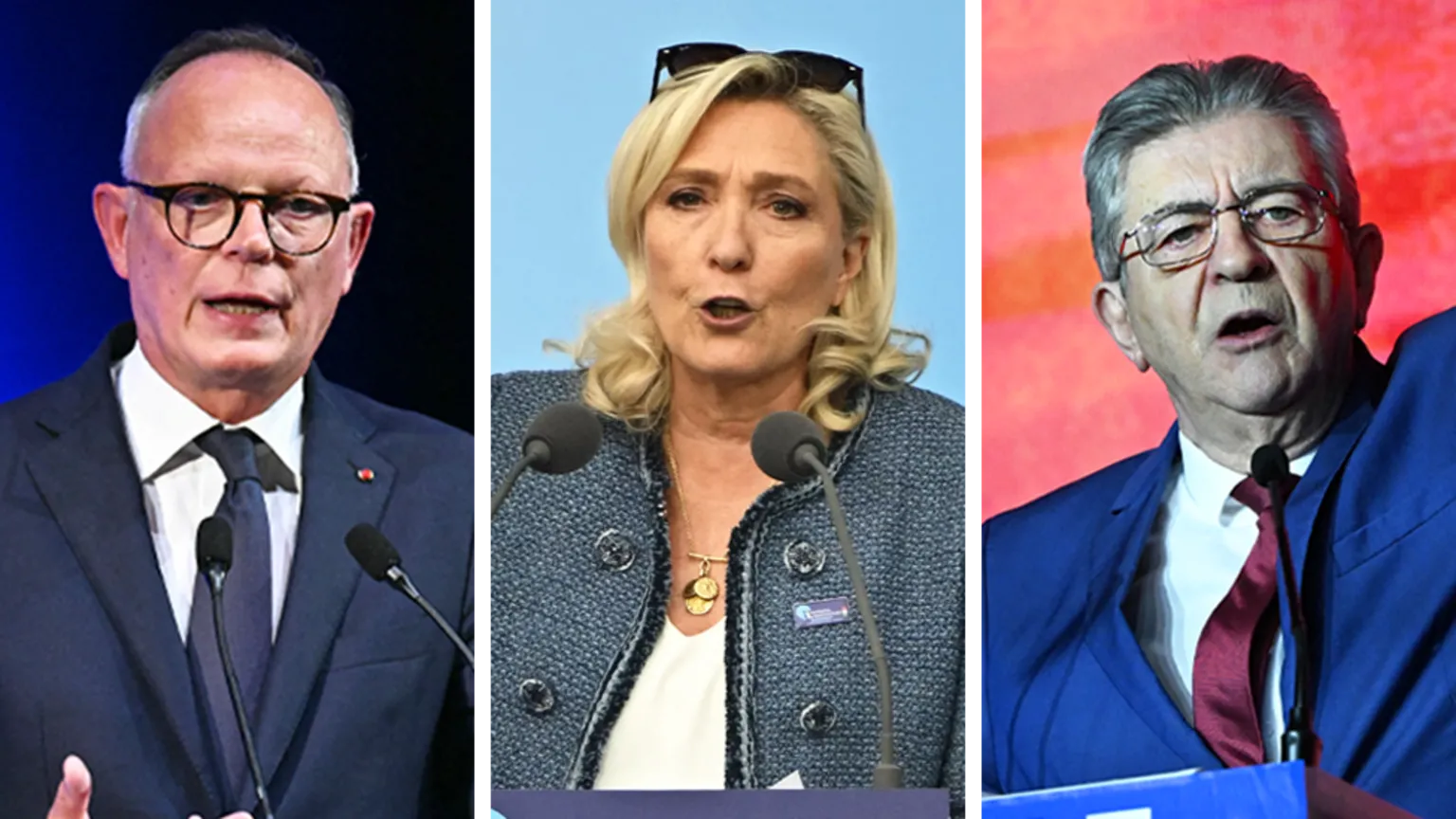
France is heading toward a crucial presidential election in 2027, and political attention is increasingly focused on who can prevent the contest from becoming a showdown between the far left and far right.
At the centre of current projections is former Prime Minister Édouard Philippe, who served under President Emmanuel Macron. Opinion polls suggest the 55-year-old centre-right politician is currently the strongest contender capable of defeating leading far-right figures such as Marine Le Pen or Jordan Bardella in a potential run-off.

Survey data also indicates that Philippe is well placed to block far-left leader Jean-Luc Mélenchon from reaching the final round, a scenario widely viewed as politically destabilising for France and its European allies.
Philippe, who leads the Horizons party, is gradually positioning himself for a formal campaign launch. He has already unveiled campaign organisers and adopted a slogan reflecting a traditional Gaullist tone, while signalling support for economic reforms such as raising the retirement age and enforcing stricter budget discipline.

His team is planning a series of high-profile campaign events in the coming months, including nationwide virtual town hall-style meetings and a major rally in Paris.
However, his path to the presidency is far from guaranteed. Rival centre-right and centrist candidates, including Gabriel Attal of Renaissance and Bruno Retailleau of The Republicans, could fragment the political space, potentially weakening his advantage in the first round.
There are also emerging challenges from the left, where a divided field could still consolidate around a single candidate, potentially drawing support away from Philippe.

Adding further complexity is a corruption investigation linked to his role as mayor of Le Havre, which his team denies, but which could become a political distraction during the campaign.
Across the political landscape, analysts note that voter sentiment in France is increasingly shifting toward the extremes, driven by concerns over immigration, economic pressure, and public services.
The far-right National Rally continues to perform strongly in polls, while the far-left France Unbowed under Jean-Luc Mélenchon maintains a solid base among younger voters and urban suburbs.

A key turning point is expected with the upcoming legal ruling involving the National Rally’s leadership, which could affect candidate eligibility ahead of the election.
Despite the uncertainty, current projections suggest that if the election becomes a direct contest between radical left and radical right forces, the outcome would still strongly favour the far right.




