

The Federal Government has restated its commitment to the successful implementation of the 1,028-kilometre Lagos–Abidjan Corridor highway, a major regional infrastructure project designed to boost trade, mobility, and economic integration across West Africa.

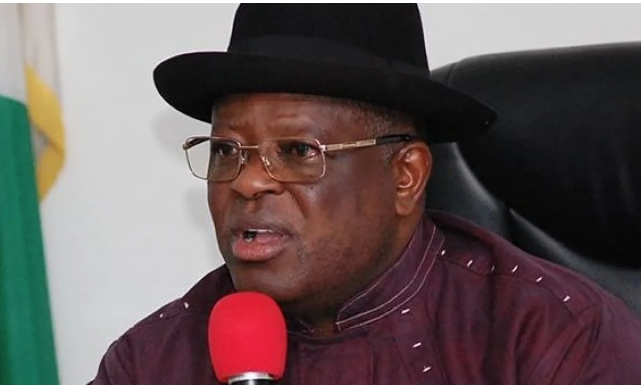
The assurance was given by the Minister of Works, David Umahi, during a high-level meeting in Abuja with delegations from the ECOWAS Commission and the African Development Bank (AfDB), who visited to review progress and address technical and financing concerns surrounding the project.
The proposed highway is expected to link Abidjan in Côte d’Ivoire through Ghana, Togo, and Benin, terminating in Lagos, Nigeria, forming a critical transport route across five West African countries.

Umahi, who also chairs the project’s Steering Committee at the ministerial level, conveyed President Bola Tinubu’s strong support for the initiative, noting that infrastructure development remains a key priority of the administration.
He explained that the corridor project is being designed to meet modern engineering standards, including reinforced concrete pavement, multiple lanes in each direction, and long-lasting road specifications aimed at ensuring durability and efficiency.

According to him, the Lagos–Abidjan Corridor is being developed in alignment with Nigeria’s broader infrastructure ambitions, including the Sokoto–Badagry Superhighway project.

Earlier, the ECOWAS Director of Transport, Chris Appiah, said the visit formed part of ongoing consultations with member states to advance implementation and strengthen regional coordination.
The project is expected to significantly enhance cross-border trade, reduce travel time, and deepen economic integration across West Africa once completed.




