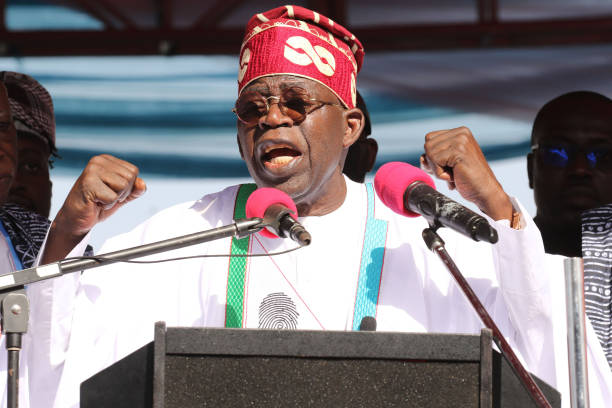
President Bola Ahmed Tinubu may adopt a less demanding campaign schedule ahead of the 2027 presidential election, as concerns over the cost of political mobilisation, security challenges and the physical demands of nationwide campaigning continue to shape preparations for the polls.

With the presidential election scheduled for January 16, 2027, political parties are facing growing pressure to intensify their efforts to win voters’ support. However, campaign activities have remained relatively subdued compared with the extensive rallies and nationwide tours that characterised the build-up to the 2023 general election.
An investigation published by The Guardian identified several factors that could explain the slow pace of electioneering, including the ages of leading presidential candidates, speculation about their health, the rising cost of organising rallies, insecurity and concerns about the credibility of the electoral process.
Despite these challenges, political parties have continued to hold consultations, seek endorsements and mobilise supporters through their respective political networks.

AGE AND HEALTH CONCERNS DRAW ATTENTION
At 74, Tinubu is seeking another term in office, while former Vice President Atiku Abubakar, who is also preparing for another presidential contest under the African Democratic Congress (ADC), is approaching 80.
The physical demands of presidential campaigns have consequently become part of the wider political discussion. Nationwide electioneering requires candidates to travel extensively, attend public gatherings, meet political stakeholders and participate in media engagements.
However, age alone does not establish that a candidate is incapable of conducting an intensive campaign. Similarly, limited public appearances should not automatically be interpreted as evidence of ill health.

The All Progressives Congress (APC) has rejected suggestions that concerns about Tinubu’s health are affecting his readiness for the election.
APC National Chairman Nentawe Yilwatda pointed to the President’s October 1 national broadcast as evidence of his fitness, insisting that Tinubu was healthy and prepared to continue his responsibilities.
The party’s position reflects its determination to counter speculation about the President’s condition as political activities gather momentum.
APC DENIES LACK OF PREPARATION
The ruling party has also dismissed suggestions that the relatively quiet campaign atmosphere indicates a lack of preparation.

According to the APC, its presidential campaign has not formally commenced, despite the political activities and mobilisation already taking place across the country.
The party is preparing to inaugurate its presidential campaign council, headed by former Zamfara State Governor Abdulaziz Yari, before a planned campaign flag-off in Kaduna on October 24.
The ADC has also inaugurated its presidential campaign council as it prepares to challenge the incumbent.
These developments suggest that the major political camps are working towards more visible campaign activities, even though their public engagement has yet to reach the scale witnessed during the previous election cycle.
For Tinubu, the challenge will be to defend his administration’s record, communicate the results of its policies and persuade Nigerians that he deserves another term.

Atiku, meanwhile, must demonstrate that he can build sufficient nationwide support and present a convincing alternative to the current administration.
RISING COSTS COULD CHANGE CAMPAIGN STRATEGIES
The financial demands of electioneering are another major challenge confronting political parties ahead of the 2027 elections.
Organising nationwide rallies involves substantial expenditure on transportation, accommodation, security, publicity, campaign offices, equipment and the movement of supporters.
The costs increase when candidates and their teams must travel across several states within a limited period. Economic pressures affecting households and businesses have also made campaign spending more difficult to sustain.

Olu Agunloye, National Publicity Secretary of the Social Democratic Party (SDP), attributed his party’s campaign approach to financial constraints rather than the age or health of its candidate.
He argued that political parties could no longer afford to spend on campaigns at the levels associated with previous elections.
His comments highlight the difficulties smaller parties face when competing against better-resourced political organisations with extensive networks and access to funding.
As a result, some parties may increasingly depend on smaller meetings, grassroots mobilisation, media appearances and digital platforms rather than expensive rallies.
Although these alternatives can reduce expenditure, maintaining visibility and reaching voters across Nigeria remains a considerable challenge.

SECURITY AND ELECTORAL TRUST REMAIN KEY ISSUES
Insecurity is another factor that could influence the organisation of political rallies, particularly in areas where large public gatherings and extensive travel present additional risks.
Concerns about the credibility of the electoral process have also contributed to the wider uncertainty surrounding the coming election.
Political observers have warned that the limited pace of campaigning could affect public confidence, particularly if parties fail to communicate their programmes and engage voters meaningfully before election day.

The situation has raised questions about whether political organisations will intensify their activities as the election approaches or rely more heavily on their state structures and influential supporters to mobilise voters.
For the smaller parties, the challenge is particularly significant because limited financial resources and security concerns could restrict their ability to compete on equal terms with the major political parties.
GOVERNORS AND POLITICAL ALLIES MAY TAKE CENTRE STAGE
With conventional campaign activities yet to reach the intensity recorded in 2023, political allies and grassroots networks are likely to play an important role in mobilising support.
Governors, party officials and influential political figures can help candidates maintain visibility, coordinate local activities and communicate campaign messages across different states.
However, the effectiveness of these networks will ultimately depend on their ability to translate political endorsements and public displays of support into votes.

Digital campaigns may also offer a cheaper way to reach large audiences, although online visibility alone cannot guarantee electoral success.
As the election draws closer, candidates will need to balance the financial and logistical demands of physical campaigning with the need for direct engagement with voters.
For Tinubu, the coming months will test the APC’s ability to maintain political momentum while addressing questions about the administration’s performance and the President’s accessibility.
Whether he personally attends every major rally or adopts a more selective schedule, the central task remains the same: convincing Nigerians that his leadership deserves another term.
The 2027 election campaign is therefore shaping up to be a contest not only of political strength, but also of resources, organisation, public confidence and the ability of candidates to connect with voters.