

By The National Patriots
What was conceived as a flagship intervention to stabilise Nigeria’s most vulnerable region is now at risk of becoming a case study in institutional paralysis.
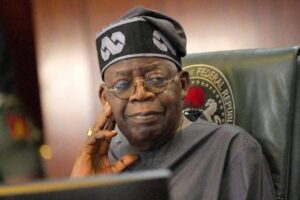
Barely months after its establishment, the North-West Development Commission (NWDC)—a flagship intervention signed into law by Bola Ahmed Tinubu on July 24, 2024—has become embroiled in a crisis that risks undermining its very purpose.
The Commission was widely viewed as a strategic response to the developmental needs of the North-West, a region that delivered significant electoral support in the 2023 presidential election, with estimates indicating over 60 percent of the winning votes.
In many communities, however, expectations of visible federal intervention have yet to materialise, fuelling perceptions—fair or otherwise—that the anticipated benefits have been slow in coming. Emerging concerns suggest that this gap between expectation and reality may be less about federal intent and more about institutional delivery challenges within the Commission itself.

Conceived as a strategic response to the deepening challenges of poverty, insecurity, and infrastructure deficits across Nigeria’s North-West, the Commission was expected to fast-track development in one of the country’s most vulnerable regions. Instead, it now finds itself paralysed by internal conflict, controversial spending proposals, and allegations of administrative overreach.
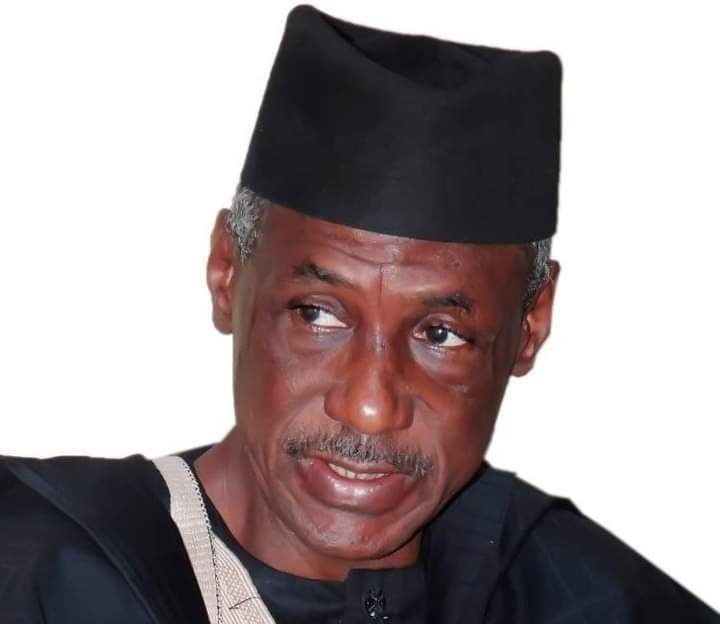
At the centre of the unfolding crisis is a bitter power tussle between Board Chairman Lawal Sama’ila Abdullahi and Managing Director Prof. Abdullahi Shehu Ma’aji—two offices whose roles are clearly defined within the Commission’s enabling framework, yet now appear locked in a struggle for dominance.

A Commission at a Standstill
Multiple internal accounts describe an agency that is effectively non-functional. Critical files remain unattended, project approvals are stalled, and operational momentum has ground to a halt.
This paralysis comes despite the Commission receiving an allocation of approximately ₦3.033 billion as early as January—funds intended to catalyse urgent interventions across seven states battling insecurity, unemployment, and infrastructural decay.

For a region where development delays carry real human costs, the implications are severe. In practical terms, stalled approvals translate into delayed roads, abandoned community projects, and lost economic opportunities for millions already under pressure.
The Budget Flashpoint
The crisis reportedly escalated during deliberations over the 2025 budget, when a controversial proposal surfaced: ₦20 billion earmarked to fence a two-hectare property in Kano.
Beyond the optics, the numbers raised fundamental questions.
At prevailing construction benchmarks, such a project would typically cost a fraction of the proposed sum.
The Managing Director is said to have opposed the plan, citing concerns over cost justification and alignment with the Commission’s core mandate.
That objection appears to have deepened existing tensions, transforming a policy disagreement into a broader institutional standoff.

Allegations of Financial Irregularities
Further complicating matters are allegations—yet to be independently verified—of questionable financial practices within the Commission.
Claims of unauthorised cash disbursements, including ₦2 million allocations to board members and ₦4 million to the Chairman, have surfaced in internal accounts. There are also reports of attempts to backdate documentation to legitimise such transactions.
Additionally, a proposed ₦75 million consultancy contract—allegedly linked to interests associated with the Chairman, with a ₦50 million upfront request—was reportedly rejected by the Managing Director on due process grounds.
One senior official, speaking on condition of anonymity, further indicated that internal disagreements extend beyond personalities to priorities—specifically whether limited resources should first address administrative costs or be deployed immediately into intervention projects that deliver visible benefits to communities.
Taken together, these issues point to deeper governance concerns that go beyond personality clashes and strike at the heart of institutional credibility.
Structural Breakdown or Leadership Failure?
At its core, the NWDC crisis reflects a breakdown not of law, but of leadership discipline.
Development commissions in Nigeria were historically created as targeted responses to regional imbalances.
From OMPADEC to the Niger Delta Development Commission, these institutions were designed to accelerate development where conventional governance structures had struggled to deliver.
However, experience has shown that without strong governance, such commissions can become vulnerable to internal disputes, political interference, and weakened accountability.
The early years of the NDDC, for instance, were marked by similar tensions that slowed delivery and undermined public confidence before reforms were introduced to stabilise its operations.
The NWDC now faces a similar test.

Development commissions operate on a clear governance architecture: the Board provides strategic oversight, while the Managing Director oversees administration and execution.
When these boundaries blur, friction becomes inevitable—and, as seen in this case, potentially destructive.
There are also reports that key administrative postings—particularly in treasury and statutory roles—have been stalled or rejected, further crippling operational capacity. Control over committees such as finance and security has reportedly become another battleground.
The result is an agency trapped in internal contestation, unable to deliver on its external mandate.
A Blow to a Critical Intervention
The implications extend far beyond Abuja boardrooms.
The North-West remains one of Nigeria’s most fragile regions, grappling with insecurity, displacement, youth unemployment, and chronic infrastructure gaps.
The NWDC was designed as a targeted intervention to address these issues with speed and focus.
Every delayed project, every stalled approval, translates into prolonged hardship for millions.
What makes the situation particularly troubling is that this is not a case of funding constraints or policy ambiguity. The Federal Government has provided both legal backing and financial resources. The breakdown lies squarely in execution.
This reality also raises a broader governance concern.
Public expectations are not shaped by policy announcements alone, but by visible results.
Where institutions fail to deliver, perceptions of neglect—fair or otherwise—begin to take root.
This disconnect between policy intention and visible outcomes is beginning to shape regional sentiment in a significant way.
In communities across the North-West, there is a growing feeling that the scale of electoral support delivered in 2023 has yet to translate into tangible developmental impact.
While such perceptions may not fully reflect the broader scope of federal initiatives, they underscore an important reality: in governance, delivery—not intention—is what ultimately defines public confidence.
In this case, the performance gap within the NWDC risks overshadowing the very intervention designed to bridge it.

Oversight and the Looming Probe
There are growing indications that the Economic and Financial Crimes Commission may initiate a formal probe into the Commission’s financial activities.
At the same time, concerns have been raised about the role of legislative oversight. Petitions are said to have reached the leadership of the National Assembly, prompting calls for urgent intervention to prevent a total institutional collapse.
Civil society voices within the North-West have also begun to mobilise, warning that continued dysfunction could derail the Commission’s mandate entirely.
The Way Forward
Nigeria has seen similar institutional crises before, and the lessons are clear: prolonged leadership disputes within strategic agencies often result in lost time, wasted resources, and diminished public trust.
In the case of the NWDC, time is already being lost. Billions allocated for development have yet to translate into visible projects, while internal disagreements continue to dominate the Commission’s operations.
As Bola Ahmed Tinubu has emphasised, “the reforms we are undertaking are difficult, but they are necessary to secure Nigeria’s long-term stability and prosperity.” However, reforms must extend beyond policy design to effective delivery. Government credibility ultimately rests not only on intentions, but on outcomes that citizens can see and experience.
In this regard, the situation at the NWDC underscores a broader principle: governance must not only design interventions—it must ensure that they deliver measurable impact in the lives of the people.

There is now a growing consensus among observers and stakeholders that decisive action may be required to break the deadlock. This may include a leadership reset to restore focus, rebuild internal cohesion, and reposition the Commission to deliver on its mandate.
For many in the region, the expectation is straightforward: the NWDC must function—not as an administrative structure—but as a results-driven intervention platform capable of delivering tangible benefits to the people.
The National Patriots note with concern that the ongoing situation within the North-West Development Commission risks undermining a critical federal intervention designed to address poverty, insecurity, and infrastructure deficits in the region. While reforms at the centre continue to reposition the economy, institutions created to deliver targeted relief must function effectively. The people of the North-West cannot be left waiting while internal disputes stall progress. Swift and decisive action is required to restore stability, ensure accountability, and reposition the Commission to deliver tangible projects. Development must not be delayed where need is urgent and expectations remain high.
If institutions created to deliver relief become trapped in internal conflict, the cost is not administrative—it is human. The North-West cannot afford delay, and the credibility of intervention must now be matched by decisive action.
The National Patriots.

Headlinenews.news



