

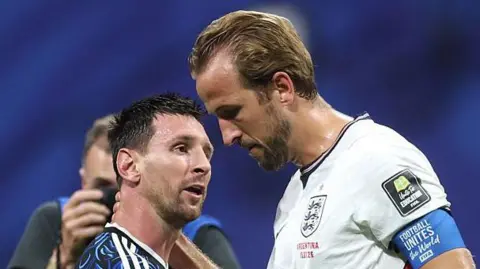
United States President Donald Trump has questioned England’s tactics following their 2-1 World Cup semi-final defeat to Argentina, suggesting captain Harry Kane was used too defensively during the closing stages of the match.
England had taken the lead through Anthony Gordon before Argentina mounted a late comeback, inspired by Lionel Messi, to book a place in Sunday’s World Cup final against Spain.

The defeat has sparked criticism of England manager Thomas Tuchel, particularly over his tactical changes in the second half. Tuchel switched to a back-five formation and introduced several defensive substitutions as England attempted to protect their advantage.
Speaking at an event on Friday, Trump praised Kane’s abilities but suggested England made the wrong decision by deploying him in a deeper defensive role after taking the lead.

According to Trump, teams should remain attack-minded rather than becoming overly defensive when leading, although he admitted he was not in a position to judge coaching decisions.
Tuchel later dismissed the remarks when asked about them during a press conference.
Trump also addressed the controversy surrounding United States striker Folarin Balogun, whose automatic one-match suspension after receiving a red card was later suspended by FIFA. The decision generated widespread debate and criticism across the football world.
The US president revealed that he had contacted FIFA President Gianni Infantino regarding the incident, joking about raising a complaint before praising the outcome, which allowed Balogun to continue playing in the tournament.

During the event, Trump described the World Cup hosted by the United States, Canada and Mexico as one of the most successful sporting events ever, while thanking FIFA for its organisation.
Infantino echoed those sentiments, saying the tournament had surpassed expectations by bringing people from around the world together and celebrating football on a global stage.

Despite the tournament’s commercial success, the Balogun suspension has continued to fuel concerns about FIFA’s independence, with critics questioning whether political influence played a role in overturning the player’s automatic ban.
The controversy has added to broader debates surrounding the tournament, including concerns over rising costs for supporters, the expansion of the competition, scheduling changes, and immigration-related issues that affected fans and participating teams.




