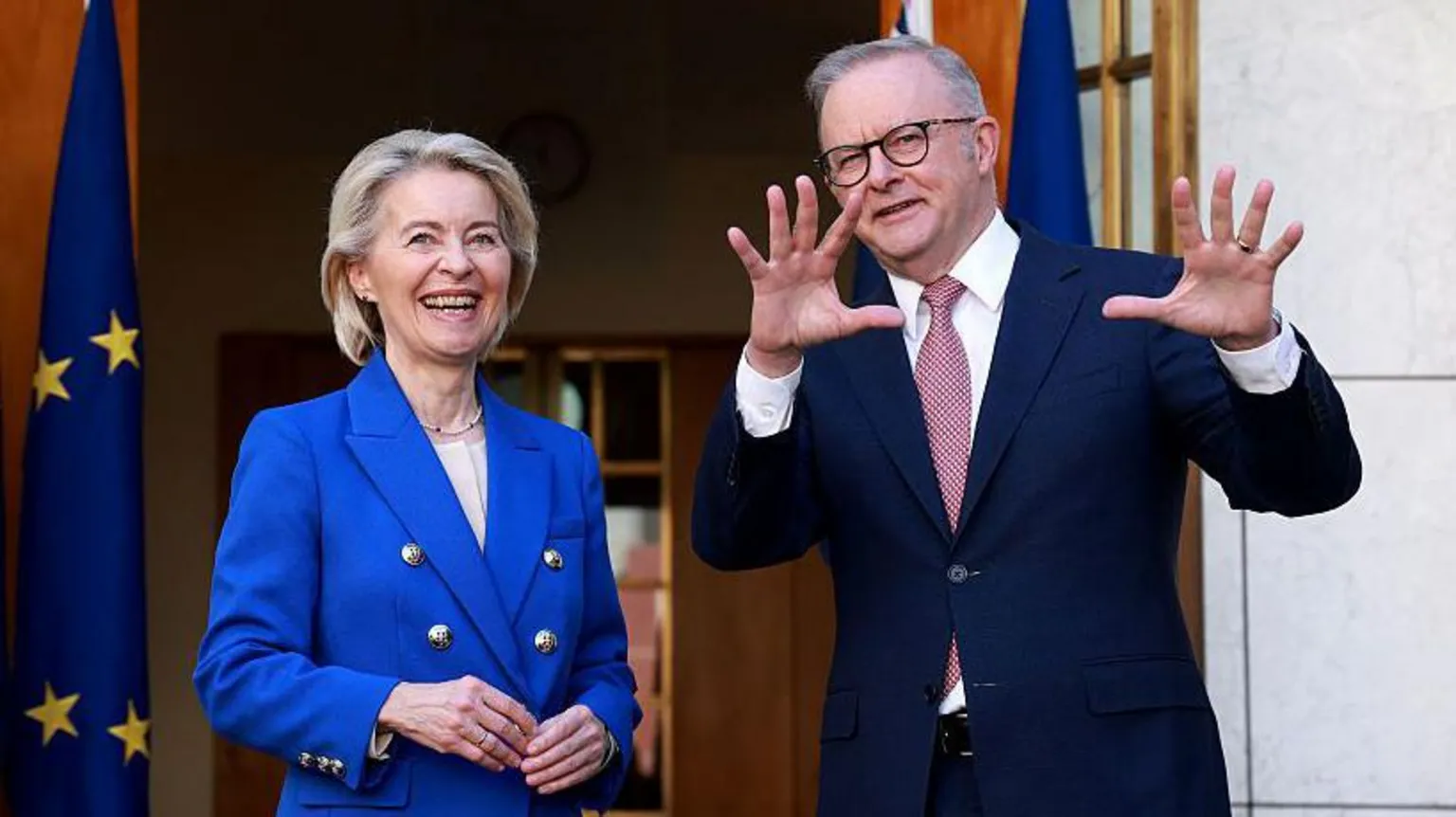
The European Union and Australia have reached a major free trade agreement after eight years of negotiations, marking a significant step in strengthening economic and strategic ties between both sides.
The deal, signed in Canberra by European Commission President Ursula von der Leyen and Australian Prime Minister Anthony Albanese, is valued at about A$10 billion. Both leaders described it as a “win-win” arrangement that reflects growing cooperation in a rapidly changing global landscape.
Beyond trade, the agreement also focuses on broader collaboration in defence and critical minerals, with both sides emphasising the need for “collective resilience” amid shifting geopolitical tensions.

A key feature of the deal is the removal of nearly all tariffs on goods traded between the EU and Australia. This is expected to boost exports of Australian agricultural products such as wine, seafood, dairy, wheat, and barley, while also making European goods like wine, spirits, chocolates, and pasta more affordable for Australian consumers.
However, not everyone is satisfied. Farmers on both sides have raised concerns over export quotas, particularly regarding Australian beef and lamb. While access to the EU market will increase significantly, Australian producers argue the agreed quotas fall short of expectations, while European farmers worry about increased competition.

The agreement also addresses sensitive issues around food naming rights. Australian producers will still be allowed to use terms like “prosecco” domestically, although the name will be phased out for exports over the next decade. Some traditional European food names will also be subject to gradual restrictions.
This deal is part of the EU’s broader strategy to expand global trade partnerships and reduce reliance on unpredictable markets, especially as global tensions and trade uncertainties continue to rise.
In addition to economic benefits, both parties agreed to deepen cooperation in areas such as counter-terrorism, maritime security, space, and the supply of critical minerals like lithium and tungsten—resources seen as vital for future industries.
Despite some disagreements, the agreement signals a long-term commitment between the EU and Australia to strengthen trade, security, and economic collaboration in an increasingly uncertain world.