

Beyond Humanitarian Relief: Why Nigeria’s 3.6 Million Internally Displaced Persons Represent Both a Moral Responsibility and a Strategic National Opportunity
The true measure of a nation is not found in its skyscrapers, highways or GDP figures. It is found in how it treats its most vulnerable citizens. In Nigeria today, millions of citizens who once owned homes, farms, businesses and livelihoods now live in camps and host communities, victims of conflicts and insecurity they neither created nor deserved.
According to the United Nations High Commissioner for Refugees (UNHCR) and the International Organization for Migration (IOM), Nigeria currently has approximately 3.6 million internally displaced persons (IDPs), making it one of the countries with the largest displaced populations in Africa. Behind these numbers are human beings whose lives have been interrupted by insurgency, banditry, communal violence and natural disasters.
A breakdown of the figures reveals the enormity of the challenge. The North-East comprising Borno, Adamawa, Yobe, Bauchi, Taraba and Gombe accounts for about 2.33 million IDPs living in more than 478,000 households. Their displacement is largely attributable to over fifteen years of Boko Haram and ISWAP insurgency. The North-West and North-Central zones account for another 1.3 to 1.4 million displaced persons driven by banditry, kidnappings, communal clashes and farmer-herder conflicts. Beyond these, over 400,000 Nigerians remain refugees in neighbouring Cameroon, Chad and Niger, while Nigeria itself hosts over 140,000 refugees and asylum seekers from more than forty countries.

Behind every statistic lies a family. Children who should be in classrooms have grown up inside camps. Women who once ran thriving businesses now depend on aid. Farmers who once fed communities have become recipients of food assistance.
This humanitarian challenge is also a development challenge.
Several years after displacement, many IDPs still struggle with inadequate shelter, healthcare, sanitation, education and livelihood opportunities. Humanitarian agencies and government institutions have made significant efforts, but the scale of the crisis continues to exceed available resources. Reports of poor living conditions and feelings of neglect have continued to emerge from several camps and host communities.
Perhaps even more troubling is the trust deficit that exists between many displaced persons and institutions responsible for their welfare. Years of hardship have created frustration and a sense of abandonment among some of the affected populations.
Yet within this tragedy lies an opportunity for national healing.
Globally, countries that confronted similar challenges transformed displacement into platforms for rebuilding societies. Colombia, which once had over seven million internally displaced citizens due to decades of armed conflict, invested heavily in reintegration programmes, housing, livelihood support and reconciliation. Rwanda similarly pursued community-based rehabilitation after the genocide, restoring confidence among survivors and rebuilding social cohesion. Turkey’s response to earthquake victims demonstrated how post-disaster reconstruction could strengthen trust between citizens and institutions.
Nigeria’s situation requires fresh thinking.
Government institutions alone cannot solve a challenge affecting millions of citizens. Civil society groups, faith-based organisations, traditional institutions and advocacy groups must complement official interventions. In many cases, community trust is more easily built through non-governmental platforms than through bureaucratic channels.

Organisations with grassroots structures and credibility can serve as bridges between displaced populations and government interventions. Through partnerships with relevant agencies, they can facilitate needs assessments, vocational training, trauma counselling, healthcare outreach, educational support and economic empowerment programmes.
What internally displaced persons seek is not charity but dignity.
They want opportunities to rebuild their lives. They want their children educated. They want healthcare, shelter and livelihoods. Above all, they want to feel remembered by their country.
This is where compassionate governance becomes important.
Throughout history, citizens have often developed enduring emotional connections with leaders who responded to their suffering. Franklin Roosevelt’s New Deal policies strengthened public confidence in the United States during the Great Depression. Reconstruction efforts in post-conflict societies have similarly produced lasting goodwill between governments and citizens.
Nigeria’s 3.6 million internally displaced persons represent more than a humanitarian responsibility. They represent millions of citizens yearning for hope and inclusion.

Should the Federal Government, working with trusted civic organisations and relevant agencies, embark on comprehensive programmes aimed at restoring dignity and livelihoods to displaced populations, the benefits would extend far beyond welfare.
Such efforts would reduce poverty, discourage extremist recruitment, strengthen national unity and rebuild trust in institutions. Compassionate governance naturally creates goodwill among citizens.
Politics should never exploit suffering. Yet history shows that people rarely forget leaders who stand with them during their darkest moments.
President Bola Tinubu’s Renewed Hope Agenda seeks to restore confidence and reposition Nigeria. Perhaps no constituency requires renewed hope more urgently than millions of displaced Nigerians who have spent years living away from their homes.
Sudan currently has about nine million internally displaced persons, Syria over seven million, Colombia over seven million and Yemen over four million. Nigeria’s 3.6 million IDPs place the country among the world’s major displacement hotspots. This reality underscores the urgency of moving beyond emergency relief towards long-term rehabilitation and reintegration.

The challenge before Nigeria is therefore larger than camp management. It is about rebuilding lives, restoring dignity and healing wounds caused by years of insecurity.
History will remember leaders not merely for the projects they commissioned, but for the people they lifted out of despair.
These 3.6 million Nigerians are not merely statistics.
They are citizens.
They are families.
They are farmers, teachers, traders and students.
And perhaps one of the greatest tests of leadership in the years ahead will not be measured by how many roads are built, but by how many forgotten Nigerians are restored to hope.
For nations become truly great not when they abandon the wounded, but when they bring them back home.
The National Patriots believes Nigeria’s 3.6 million internally displaced persons deserve more than temporary relief. They deserve dignity, rehabilitation and hope. Beyond humanitarian obligations, restoring livelihoods, education and healthcare for displaced citizens will strengthen national unity, reduce insecurity and rebuild trust in institutions. A nation becomes truly great not by abandoning the vulnerable, but by bringing them back into the promise of citizenship and shared prosperity.
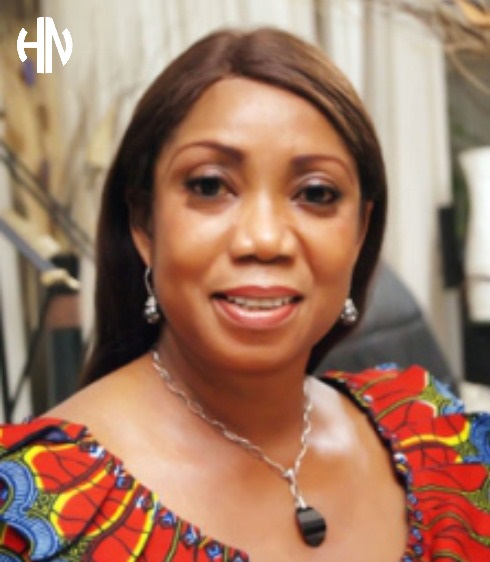
Dr. G. Fraser. MFR
President, The National Patriots.




