

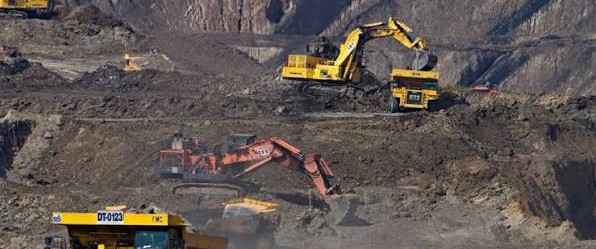
Nigeria has announced the discovery of a major polymetallic mineral deposit in Kaduna State, a development experts describe as one of the country’s most significant critical mineral finds in recent years.
The deposit, located in the pegmatite-rich Gidan Waya area of Jema’a Local Government Area, contains valuable minerals including nickel, copper, gold, platinum group metals, and rare earth elements. The discovery was made by Steron Mining and later confirmed by the Nigerian Geological Survey Agency (NGSA).

Kaduna is already known for its high-quality platinum, lithium, and other rare earth minerals, further strengthening its position as an important mining destination.
In a separate development, Steron Mining recently announced the discovery of 3.3 million metric tonnes of lithium reserves at a project near Abuja, with the site’s total estimated mineral resources standing at 94.8 million tonnes.
While crude oil continues to dominate Nigeria’s export earnings, generating more than ₦20.22 trillion in revenue during the first five months of the year, the Federal Government is intensifying efforts to develop the mining industry into another major contributor to the economy.

The country’s solid minerals sector generated ₦63.92 billion in government revenue during the first 11 months of 2025, compared to ₦38 billion recorded throughout 2024, reflecting growing investment and activity in the industry.
To strengthen the sector, the government has introduced reforms aimed at tackling illegal mining, increasing revenue generation, and developing over 40 commercially viable mineral resources, particularly lithium and other minerals critical to the global energy transition.
Mining companies are now required to present plans for local mineral processing and refining before obtaining licences, a policy designed to encourage value addition, create jobs, and retain more investment within Nigeria instead of exporting raw minerals.
Authorities have also revoked more than 1,600 inactive or improperly held mining licences, while the Mining Cadastre Office canceled over 4,700 dormant, expired, and illegally acquired mineral titles as part of efforts to eliminate speculative land holding.
Nigeria’s expanding mining industry has continued to attract foreign investors, particularly from China. Jiuling Lithium Mining Company is backing a $600 million lithium processing facility on the Kaduna-Niger state border, while Canmax Technologies is developing a $200 million lithium processing plant in Nasarawa State.

These investments align with the Federal Government’s policy of promoting local mineral processing and discouraging the export of unprocessed solid minerals to increase domestic economic value.
Beyond mining, Chinese companies remain major investors across Nigeria’s economy, with interests spanning manufacturing, telecommunications, oil and gas, electricity infrastructure, and technology.
Despite the growing importance of the mining sector, oil remains central to Nigeria’s economy. The Nigerian National Petroleum Company (NNPC) Limited is targeting an increase in crude oil production to 1.8 million barrels per day, while indigenous energy companies continue to expand drilling activities to boost output and reserves.
Meanwhile, the 650,000-barrel-per-day Dangote Refinery has significantly reshaped Nigeria’s petroleum industry by reducing dependence on imported fuel, improving foreign exchange stability, meeting domestic fuel demand, and positioning the country as a major exporter of refined petroleum products across Africa and other international markets.




