

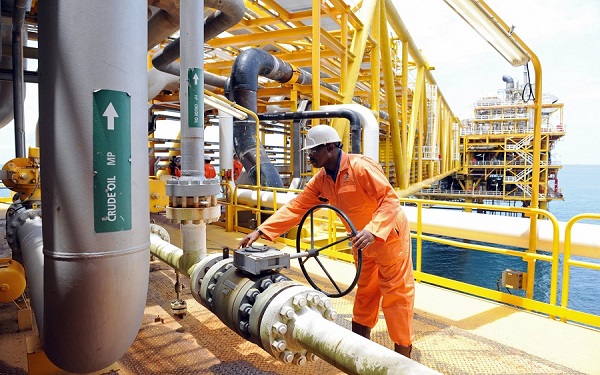
Foreign direct investment (FDI) into Nigeria rose significantly to about $4 billion in 2025, according to the World Investment Report 2026, marking a strong recovery driven largely by investments in the country’s oil and gas sector.
The report showed that FDI inflows increased from $1.6 billion in 2024 to approximately $4.005 billion in 2025, reversing a decline that had seen investment fall to $895 million in 2022. The improvement placed Nigeria among a number of African economies that recorded investment growth despite an overall slowdown across the continent.

The report attributed the increase mainly to major oil and gas investment projects, including a transaction valued at around $2 billion.
Nigeria also recorded a sharp rise in outward investment, which climbed from $408 million in 2024 to $1.19 billion in 2025, while the country’s total inward FDI stock reached nearly $93 billion by the end of the year.
Among the notable investment deals highlighted were the sale of Shell’s onshore oil assets to Nigerian-owned Renaissance Africa Energy and the acquisition of Lafarge Africa by China’s Huaxin Cement. According to the report, these transactions reflect growing local ownership in Nigeria’s oil industry alongside sustained foreign investor interest in the country’s manufacturing sector.

The report also identified the Dangote Group as one of Africa’s major outward investors after committing $3 billion to a chemicals project in neighbouring Ethiopia. The investment ranked among the continent’s ten largest Greenfield projects announced in 2025.
On the policy front, the report noted that Nigeria introduced wide-ranging fiscal reforms, including a new minimum tax framework aligned with international standards.
It added that Nigeria and Cameroon replaced broad tax exemptions with targeted tax credit systems tied to conditions such as job creation, local value addition and investments in priority sectors.
The Federal Government also introduced performance-based tax incentives for companies operating in the upstream petroleum industry, linking tax benefits to operational efficiency and cost management.
Beyond the energy sector, the report commended Nigeria’s efforts to improve the investment climate through technology-focused regulatory reforms. It highlighted the implementation of the Startup Act and supporting Central Bank regulations that allow innovative businesses to test new products under controlled regulatory environments before full market approval.
The report further recognised Nigeria’s participation in regional trade integration efforts, noting that the country joined Côte d’Ivoire, Benin, Ghana and Togo in adopting measures to harmonise customs and border procedures along the Abidjan-Lagos trade corridor to facilitate faster cross-border commerce.

While foreign direct investment across Africa declined from exceptionally high levels recorded in 2024, the report observed that several West African countries, including Nigeria, experienced stronger investment inflows, largely driven by developments in the natural resources and energy sectors.




