


2027 ELECTIONS: BRIDGING THE GAP BETWEEN GOVERNANCE AND PUBLIC PERCEPTION
By Princess G. Fraser, MFR
Perception Management & Governance Consultant
Politics and governance are often mistaken for the same thing. They are not.
A government may be implementing the right policies, making difficult decisions and laying the foundations for future prosperity, yet still struggle to convince citizens that progress is being made. History is filled with examples of governments across Africa, Asia and Latin America that introduced reforms later acknowledged as necessary but paid a political price because citizens could not see, feel or directly connect with the benefits of those reforms in their everyday lives.
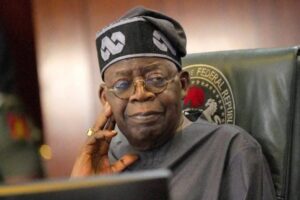
This may well be the most important political challenge confronting President Bola Ahmed Tinubu as Nigeria gradually moves towards the 2027 elections.
Nearly three years into his administration, the President can point to a substantial list of achievements.
His government removed a fuel subsidy that had become fiscally unsustainable and was consuming trillions of naira annually.
It embarked on major tax reforms aimed at expanding government revenues and reducing leakages.
It launched the Nigerian Education Loan Fund, providing access to higher education financing for thousands of students.
It strengthened local government autonomy through landmark judicial outcomes, expanded infrastructure spending, approved regional development commissions and increased allocations to states through fiscal reforms.
The administration has also initiated some of the most ambitious infrastructure projects in modern Nigerian history, including the Lagos-Calabar Coastal Highway, the Sokoto-Badagry Super Highway, rail modernisation projects and strategic investments in ports, energy and transportation networks. From a policy and development perspective, these are significant initiatives capable of reshaping Nigeria’s economic future.
Yet many Nigerians remain unconvinced.
The reason is neither mysterious nor unique to Nigeria.
Most citizens do not evaluate governments the way economists, political scientists or policy experts do.
They evaluate governments through personal experience.
The average trader does not analyse GDP growth figures.
The average farmer does not spend time studying fiscal deficits or foreign exchange policies.
The average artisan is unlikely to follow debates about tax reforms or sovereign credit ratings.
What people understand are the realities around them.
They understand food prices, electricity supply, jobs, security and whether life feels better than it did yesterday.

This creates what political analysts describe as a perception gap.
A government may be recording measurable policy successes while simultaneously losing the public relations battle because citizens cannot connect those achievements to their daily lives.
A recent incident in Kebbi State illustrates this challenge.
During a political mobilisation event, the state Chairman of APC in Kebbi State, reportedly addressed supporters, defending the achievements of the Tinubu administration and urging continued support for the government. Shortly afterwards, reports emerged that the same political figure had allegedly become a victim of insecurity and was abducted by criminals.
Whether symbolic or coincidental, the incident captures a broader dilemma confronting the administration.
For citizens worried about insecurity, statistical explanations often carry little weight.
A person who fears kidnapping is unlikely to be persuaded by macroeconomic indicators.
A parent struggling to feed a family may find little comfort in discussions about fiscal consolidation or future economic projections.

This does not mean the reforms are unnecessary. On the contrary, many economists agree that several of the reforms undertaken by the Tinubu administration were unavoidable if Nigeria was to prevent a deeper fiscal crisis.
The fuel subsidy regime had become unsustainable. Foreign exchange distortions were damaging investor confidence and creating opportunities for arbitrage. Public finances required restructuring. In many respects, the administration inherited difficult choices that previous governments had postponed for years.
However, political reality often differs from economic reality. Being correct is not always enough. Government must also be understood.
This is where a significant opportunity exists for the administration. The challenge is no longer merely implementing reforms. The challenge is translating those reforms into visible benefits that citizens can identify with. Many government achievements continue to be communicated primarily through elite channels such as policy documents, press conferences, official statements, economic reports and television interviews. While these remain important, they rarely resonate with ordinary citizens in the same way that direct experience does.
People are far more likely to trust what they can see than what they are told.
This is why grassroots-focused interventions may become increasingly important as the political season approaches.
The National Patriots Movement has consistently advocated a model that combines major national reforms with highly visible community-based interventions. The logic is straightforward. Citizens may not understand tax reform, but they understand a new primary healthcare centre. They may not understand fiscal restructuring, but they understand a functioning borehole. They may not understand debt optimisation, but they understand improved roads, safer communities, improved health facilities, available funds for basic expenses, cost of food, logistics, better schools and opportunities for their children.

In essence, people respond most strongly to government when they can physically see evidence of its presence.
Political history supports this conclusion. In countries such as India, Indonesia, Brazil and China, governments that successfully translated national development programmes into visible community projects often maintained public support even during periods of economic adjustment because citizens could clearly see the connection between government policy and personal benefit.
The Tinubu administration already possesses several advantages that could be leveraged more effectively. Increased allocations to states resulting from fiscal reforms have provided governors with significantly more resources than were available in previous years. Yet many citizens remain unaware of the relationship between federal reforms and the projects being undertaken by their state governments.
Similarly, major infrastructure projects currently underway are expected to generate substantial long-term economic benefits, but infrastructure often requires years before citizens fully experience its impact.
This creates a political challenge. Opposition parties naturally focus on present hardships. Governments, by contrast, focus on future gains. In politics, however, immediate realities often outweigh future promises.
Security presents an even greater challenge. Regardless of economic progress, insecurity remains one of the most powerful drivers of public dissatisfaction. The recent school abductions in Oyo State, continuing attacks across parts of the North-West and North-Central and persistent concerns about kidnapping reinforce the belief among many Nigerians that security remains the most important measure of government performance. No amount of economic data can completely offset public concerns about personal safety.
As the 2027 elections approach, the administration faces a defining question: can it bridge the gap between governance and public perception? Can it transform policy achievements into visible outcomes that ordinary Nigerians can see, touch and experience? Can it ensure that reforms are not merely understood by experts but appreciated by citizens?

The answers may determine not only the political fortunes of the ruling party but also how history judges the Tinubu presidency.
The reality is simple. Governments rarely receive political credit for achievements people cannot feel. Citizens do not vote for policy papers, economic theories or statistical projections. They vote for outcomes. They vote for experiences. They vote for what affects their daily lives.
President Tinubu’s administration may ultimately be remembered for some of the most consequential reforms undertaken in Nigeria’s democratic era. Yet reforms alone do not win public confidence. The benefits must be visible, the achievements must be relatable and the impact must be felt at the grassroots.

In democratic politics, governance matters. But public perception matters too. The most successful leaders understand both.
As Nigeria approaches the 2027 elections, governance alone may not be enough. Citizens must see, feel and identify with the benefits of reforms in their daily lives. The National Patriots Movement believes visible grassroots interventions, improved security, community projects and effective communication are essential to bridge the gap between government achievements and public perception.
Princess Gloria Adebajo-Fraser MFR.
President, the National Patriots.




