APC’s National Spread, Expanded State Machinery and Grassroots Interventions Could Secure a Renewed Mandate
By Gloria Fraser, MFR
Nigeria’s 2027 presidential election will not be determined by social media excitement or regional assumptions. It will be decided by constitutional arithmetic, organisation, turnout, and the capacity to transform political support into legitimate votes across the federation.
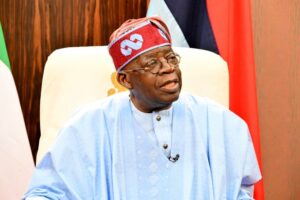
On these measurements, President Bola Ahmed Tinubu enters the contest with the strongest structural pathway to a first-round victory.
Nigerians are experiencing significant economic pressure from inflation, higher energy costs, insecurity, and reduced purchasing power. These conditions must be addressed urgently. Nevertheless, economic hardship is only one component of electoral behavior. Party organisation, geographical spread, grassroots mobilisation, state-level alliances, and opposition fragmentation will also shape the result.
Tinubu possesses advantages across these areas, but his political structure must now be reinforced by visible interventions that improve Nigerians’ daily lives.
THE CONSTITUTIONAL ARITHMETIC
Section 134 of the Constitution requires a presidential candidate to secure the highest number of votes nationally and obtain at least 25 per cent of the votes cast in at least two-thirds of the states and the Federal Capital Territory.
This means that overwhelming support concentrated in a few regions is insufficient. The successful candidate must combine national plurality with broad geographical acceptance.
Tinubu has previously demonstrated this capacity.
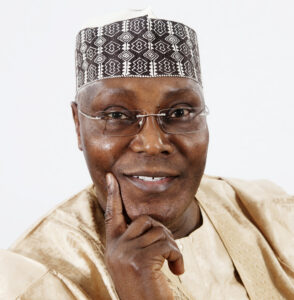
In 2023, he secured 8,794,726 votes, compared with Atiku Abubakar’s 6,984,520 and Peter Obi’s 6,101,533. More significantly, Tinubu obtained at least 25 percent in 30 states, while Atiku reached the benchmark in 21 states and the FCT, and Obi in 16 states plus the FCT.
Tinubu’s objective for 2027 is, therefore, clear: retain competitive votes nationally, consolidate APC strongholds, and improve his performance where the party recorded weak totals.
THE GOVERNORS’ ADVANTAGE
Federation Account allocations are statutory public revenues belonging to the federal, state, and local governments. They should not be described as personal gifts from the president.
However, allocations have increased substantially under the Tinubu administration. For April 2026 alone, the three tiers shared ₦2.257 trillion, giving state and council administrations greater capacity to pay salaries, execute projects, and deliver social programs.
The Osun governorship election provides an important example. After INEC declared Governor Ademola Adeleke re-elected, he attributed his victory to projects delivered across all 30 local government areas. His explanation underlined a basic political truth: voters are more likely to reward an administration whose work they can see in their communities.
Those projects were selected and executed by the Osun administration, which remains responsible for its expenditure. But, the state’s fiscal capacity was supported by increased statutory allocations generated within the federal revenue environment overseen by Tinubu.
The lesson is powerful. Revenue released from Abuja produces the greatest public and political value when it becomes visible roads, schools, healthcare, water, electricity, and livelihoods at the grassroots.
The APC reportedly controls approximately 31 of Nigeria’s 36 governorships, providing Tinubu with the country’s most extensive network of governors, legislators, council chairmen, and ward operatives.
Governors cannot command voters. Effective local structures can, however, help Tinubu secure the required geographical spread and accumulate the votes needed for a national plurality.
TINUBU’S REGIONAL PATHWAY
The Southwest remains Tinubu’s strongest organisational base. Recovering Lagos while maintaining strength in Ekiti, Ondo, and Ogun would increase his total. Oyo and Osun should be treated as competitive battlegrounds rather than automatic victories.
The Northwest can not be allocated wholesale to one opposition candidate. Tinubu defeated Atiku in Jigawa and Zamfara in 2023 and remained competitive across the region. APC governors and divisions among northern opposition forces provide a foundation for substantial votes.
The North-Central could again be decisive. Tinubu led the zone in 2023 with approximately 1.76 million votes. APC structures in Benue, Kogi, Kwara, Niger and Nasarawa provide a platform for retaining votes and spread.
The Northeast requires targeted engagement, while the Southeast objective should be to improve considerably upon the APC’s weak 2023 totals. Political realignments have also made the South-South more accessible.
A strictly illustrative pathway could produce 2.8–3.3 million votes in the Southwest, 2.5–3.1 million in the Northwest, 1.8–2.3 million in the North-Central, 1.3–1.7 million in the Northeast, 1.1–1.5 million in the South-South and 300,000–600,000 in the Southeast.
That creates a potential national range of approximately 9.8 million to 12.5 million votes. It is a scenario based on the 2023 foundation, APC’s expanded structure, and current political alignments—not a prediction.
THE THREE-MILLION-VOTER OPPORTUNITY
Undecided voters are eligible voters who intend—or are reasonably likely—to vote but have not made a final choice between the available candidates or parties. They differ from committed supporters and habitual non-voters.
Their importance lies in their flexibility. Government performance, economic conditions, campaign developments, candidate debates, and targeted communication can still influence their decisions.
The May 2026 SBM Intelligence survey found that 11.3 percent of respondents nationally were undecided, rising to 23 percent in the Southwest and 16.4 percent in the Northeast.
The survey covered 829 respondents across eight states and the FCT and was not weighted against INEC’s voter register. It therefore cannot establish the exact number of undecided Nigerian voters.
However, if approximately 24–27 million valid votes are cast, an undecided proportion of around 11 percent could represent roughly 2.6 million to three million persuadable voters.
International experience demonstrates their potential impact. A post-election evaluation of the 2016 United States presidential election found strong evidence of a late movement towards Donald Trump, particularly in closely contested states.
In Britain’s 2017 general election, the British Election Study found that 52 percent of previously uncertain men and 54 percent of uncertain women eventually voted Labor, contributing to the party’s stronger-than-expected performance.
Undecided voters do not determine every election independently, but in a close contest, they can overturn polling expectations and reshape the result. This estimated three-million-voter constituency should become a central focus of Tinubu’s grassroots strategy.
THE ATIKU–OBI LIMITATIONS
Atiku has contested the presidency repeatedly without success, including during electoral cycles zoned to northern candidates—raising continuing questions about his ability to command sufficient acceptability across the North and convert his longstanding political networks into a winning national coalition.
Atiku possesses longstanding northern networks, but his candidacy in 2027 encounters the continuing expectation of rotational presidency between North and South and other controversies.
Rotation is a political convention, not a constitutional requirement. Nevertheless, many Nigerians consider it important to national inclusion and stability. After President Muhammadu Buhari’s eight years and Tinubu’s first southern term, Atiku could face resistance from voters who believe the South should complete eight years.
The National Patriots assessment suggests that, particularly in Kano, some voters still view Peter Obi through the unresolved historical memory of the 1966 coup and the killing of prominent northern leaders by military officers largely of southeastern origin—a deeply sensitive legacy that should not be transferred collectively to today’s Southeast, but which remains an obstacle requiring sustained reconciliation, trust-building and national dialogue.
Obi retains considerable support among younger, urban, and southeastern voters. His challenge is expanding that support into competitive organisation across rural northern Nigeria.
A National Patriots survey/ assessment conducted in Northern Nigeria recently reportedly placed acceptability at 47 percent for Tinubu, 30 percent for Atiku and 17 percent for Obi.
These figures represent a random sampling survey of respondents rather than a definitive measurement of all northern voters as the sample size, state coverage, field dates, and weighting are yet to be published. Even so, they suggest Tinubu has a lead to consolidate—not a margin permitting complacency.
NATIONAL PATRIOTS’ INTERVENTION PROPOSAL
The National Patriots has recommended that Tinubu urgently commence special intervention projects targeted at grassroots communities.
These should be lawful, transparent, and directed towards food production, rural roads, primary healthcare, water, electricity, school rehabilitation, youth employment, women’s empowerment, and vulnerable households.

Every local government should feel the impact of the federal Government—not merely hear about economic indicators that have not improved household conditions.
The interventions should be supported by professional perception management and reputation recovery. This must not mean concealing hardship or manufacturing achievements. Credible reputation recovery begins with performance, verified results, honest communication, and sustained community engagement.
Tinubu’s central challenge is the gap between the administration’s reform narrative and citizens’ lived experience. Visible interventions can narrow that gap, strengthen acceptability, and persuade a meaningful share of undecided voters.

The political structure for a first-round victory exists. What must now be added is urgent grassroots delivery capable of converting reform into relief, public uncertainty into confidence, and increased federal revenue into projects Nigerians can see and touch.
Political machinery can carry a candidate to every
ward, but only visible performance can win the undecided. The time for intervention, perception management, and reputation recovery is now.
Princess Gloria Adebajo-Fraser MFR.
Former Special Adviser to Former President Goodluck Jonathan