

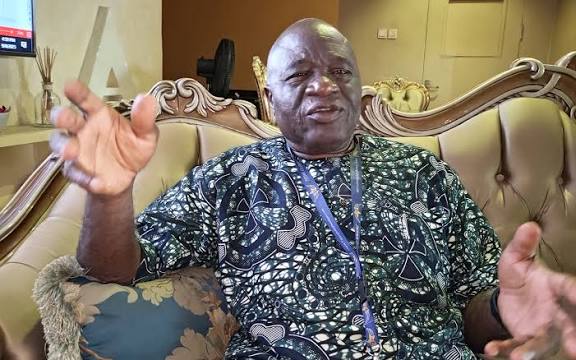
Sheri Kyari, a seasoned aviation professional with nearly five decades of experience as an aircraft maintenance engineer, shared his insights in an interview with Olusegun Koiki. He discussed the proposed demolition of Murtala Muhammed International Airport (MMIA) Terminal One in Lagos, the Federal Government’s Bilateral Air Service Agreement (BASA) with Brazil, and other aviation matters.


Federal Government’s Plan to Reconstruct MMIA Terminal One
The Federal Government recently announced plans to demolish and rebuild MMIA Terminal One. Kyari expressed concerns about the feasibility of this approach, warning that a complete demolition could disrupt passenger and aircraft operations significantly. He noted that the newer MMIA Terminal Two may struggle to handle the increased traffic if Terminal One is taken offline. Instead, he suggested a phased refurbishment, starting with sections like the E-Wing and moving to the D-Wing, to keep the terminal partially operational for passengers.
Kyari emphasized that a full demolition would require meticulous planning, including the implementation of a slot system to manage limited airport capacity. Airlines would need designated time slots to coordinate operations efficiently. He described the prospect of demolishing the terminal as “fearful” and “scary,” highlighting the complexity of managing passenger and aircraft movements during such a project.


Is N712 Billion Adequate for the Reconstruction?
The government has allocated N712 billion for the MMIA Terminal One project, but Kyari believes this budget is inadequate if the plan involves a complete demolition and rebuild. He pointed out that demolition alone would cost billions of naira, and inflation would further strain the budget. However, if the project focuses on refurbishing the terminal to enhance efficiency without a full teardown, Kyari believes the allocated funds could suffice.
BASA Agreement with Brazil and Air Peace’s New Route
The Federal Government recently signed a BASA with Brazil, and Air Peace plans to launch direct flights between Nigeria and Brazil before the end of 2025. Kyari noted that developing a new route takes time, often over a year, to achieve viable passenger numbers. The success of this route depends on trade agreements facilitating commerce, such as Nigerian businesses importing goods from Brazil or exporting raw materials and finished products. He highlighted Brazil’s large market potential and suggested that Nigeria could serve as a transit hub for African passengers if Air Peace expands regionally, especially since few African airlines fly to Brazil.


Kyari acknowledged concerns about Brazil’s association with drug trafficking, urging Nigerian security agencies to enhance vigilance to prevent smuggling. He remains optimistic that consistent operations could build a sustainable passenger load over time.
National Carrier vs. Flag Carrier for Nigeria
Kyari advocated for Nigeria to establish a national carrier, citing the trend across African countries. He argued that a national carrier provides international credibility and protection for the aviation industry. Drawing from examples like British Airways, which operates under a franchised name without full government ownership, Kyari suggested the Nigerian government could hold a small stake (e.g., five percent) while allowing private investors and institutions to drive the airline. This model, he believes, would balance government involvement with private sector efficiency.




