

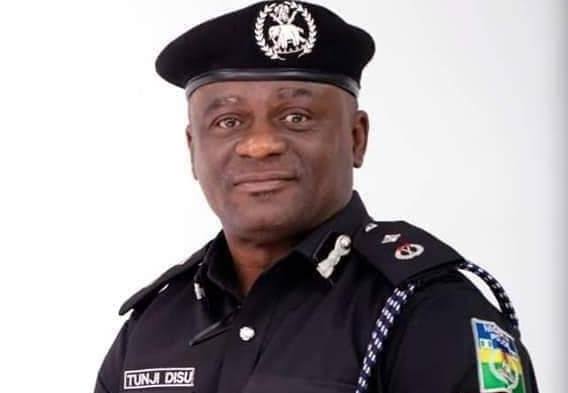
Why Tunji Disu’s Operational Depth Positions Him Strongly for the IGP Role.
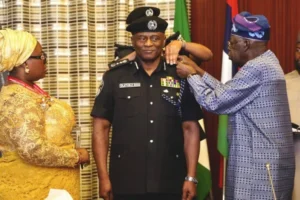
The appointment of Tunji Disu as Acting Inspector-General of Police has sparked discussion across security and political circles.
Leadership transitions at the top of the Nigeria Police Force often generate speculation, but the decisive question is not who wanted the job — it is who is best prepared for it at this moment.


President Bola Ahmed Tinubu’s choice appears to reflect a clear preference for operational command depth over public profile. In a period marked by terrorism threats, organised kidnapping networks, urban gang rivalries and pre-elective tensions, field experience carries strategic weight.
A Career Built on Operational Assignments
Disu’s policing career has largely unfolded in high-risk environments.
As a former head of the Intelligence Response Team (IRT), he operated at the frontlines of intelligence-led policing — coordinating tactical arrests, dismantling kidnapping rings and managing sensitive investigations requiring inter-agency cooperation.
The IRT has long been regarded as one of the Nigeria Police Force’s elite operational units.
Leadership in such a unit demands decision-making under pressure, intelligence interpretation, and rapid-response coordination — core competencies for national-level command.
Later, as Commissioner of Police in Rivers State, Disu served in one of Nigeria’s most politically sensitive and security-volatile states.
Rivers has historically experienced cult violence, oil-related criminality, election-related tensions and organised urban crime.

Managing such a theatre requires balance — firmness without escalation, intelligence without indiscriminate force.
Security analysts say this breadth of exposure is not incidental; it is foundational.
“The IGP must understand both counter-crime operations and the political temperature of volatile states,” a retired senior security official told Headlinenews.news. “That kind of experience is earned in the field, not acquired through administrative postings alone.”
Counterterrorism and National Security Readiness.


Nigeria’s security challenges today extend beyond conventional crime.
Terrorism spillovers, banditry networks, and coordinated violent groups demand intelligence-driven strategy and operational integration across agencies.
An IGP without substantial operational grounding would face steep adaptation challenges in such an environment.
Counterterrorism policing requires familiarity with intelligence cycles, informant management, tactical deployments and crisis containment.
Observers note that while many senior officers possess strong administrative, diplomatic or communications experience, not all have led high-intensity operational theatres.
In moments where counterterrorism capability and organised crime disruption are national priorities, operational pedigree becomes a decisive factor.
The Criteria for the Top Job.
Appointments to the office of Inspector-General are rarely symbolic.

Presidents typically consider:
Experience leading tactical operations.
Capacity to coordinate intelligence-driven missions.
Performance in politically sensitive states.
Command credibility among rank-and-file officers.

Crisis management under public scrutiny.
Disu’s career intersects with several of these benchmarks. Officers who have “walked the ground” often command stronger internal confidence within the Force.
That morale factor can translate into more decisive implementation of reform policies.
Beyond Personal Rivalries.
It is important not to reduce the appointment to personal comparisons.
The Nigeria Police Force includes highly competent officers across diverse specialisations — from training and policy development to international liaison and communications strategy.

However, when national security conditions demand hardened operational leadership, presidents may tilt toward candidates whose careers reflect sustained exposure to tactical command and intelligence coordination.
This appears to be the case here.
A Pre-Elective Security Test
With Nigeria entering a politically sensitive pre-elective period, the policing environment will require neutrality, crowd management discipline and rapid intelligence response to prevent opportunistic violence.
An IGP who has commanded in volatile terrain is arguably better positioned to anticipate flashpoints and prevent escalation.

The Ultimate Measure: Results.
Leadership legitimacy in policing is not sustained by commentary; it is sustained by measurable outcomes — crime trends, response effectiveness, institutional discipline and public confidence.
Tunji Disu’s appointment signals an emphasis on operational capability at a time when Nigeria’s security landscape demands precisely that.
If violent crime indicators decline, intelligence integration improves and election-season stability is preserved, the decision will speak for itself.
At critical national moments, experience is not ornamental — it is decisive.
Based on operational depth and field command exposure, many observers believe Tunji Disu is strongly positioned for the task ahead.
The National Patriots commend President Tinubu’s decision to prioritise operational competence in appointing Tunji Disu as Acting IGP. At a time when Nigeria faces complex security threats and a sensitive pre-elective climate, field-tested leadership is essential. Intelligence-driven policing, counterterrorism readiness and disciplined command experience must guide the Force. Results—not lobbying or profile—should determine suitability for office. Nigeria needs steady hands, strategic depth and measurable outcomes. This appointment reflects that direction.
Dr. G. Fraser. MFR
Headlinenews.news Special Report




