

A recent analysis of Thursday’s Supreme Court rulings has raised fresh concerns over the stability and future of Nigeria’s major opposition parties, particularly the African Democratic Congress (ADC) and the Peoples Democratic Party (PDP), ahead of the 2027 general elections.

The court decisions, though described as technical, have significantly altered internal party structures and deepened leadership crises within both parties, creating uncertainty over their readiness for upcoming electoral deadlines.
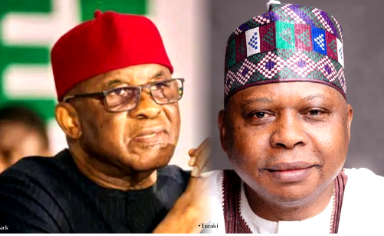
In one ruling, the Supreme Court reinstated former Senate President David Mark as leader of the ADC but sent the substantive dispute back to a lower court, effectively leaving the party in a temporary leadership arrangement and legal uncertainty.
In another decision, the court nullified the PDP’s Ibadan convention and the National Working Committee led by Tanimu Turaki, ruling that the process violated judicial orders, thereby stripping the party of a recognised national leadership structure.

The developments come at a critical time, as the Electoral Act 2026 requires all political parties to submit digital membership registers to the Independent National Electoral Commission (INEC) by May 10, 2026, a requirement that directly affects eligibility for the 2027 elections.
Political analysts warn that unresolved internal disputes could weaken both parties’ ability to meet electoral deadlines, potentially affecting their participation in the next general election.

The ADC ruling has been described as leaving the party in a fragile position, with its leadership dispute still pending before the courts and questions remaining over its authority to make binding political decisions such as candidate selection and coalition agreements.
Similarly, the PDP faces what observers describe as a leadership vacuum following the nullification of its national executive structure, with the Board of Trustees currently acting in an interim capacity despite unclear legal authority over electoral processes.

Commentators and political stakeholders have expressed differing views on the implications, with some arguing that ongoing litigation could derail opposition strategies, while others suggest that the parties still have legal pathways to resolve their crises before the election timeline closes.
Concerns have also been raised about the broader implications for opposition unity, coalition building, and the feasibility of presenting a strong challenger in the 2027 presidential race.

As legal battles continue, attention has shifted to whether the ADC and PDP can reorganise quickly enough to meet INEC’s requirements and stabilise their internal structures before critical electoral deadlines.




