

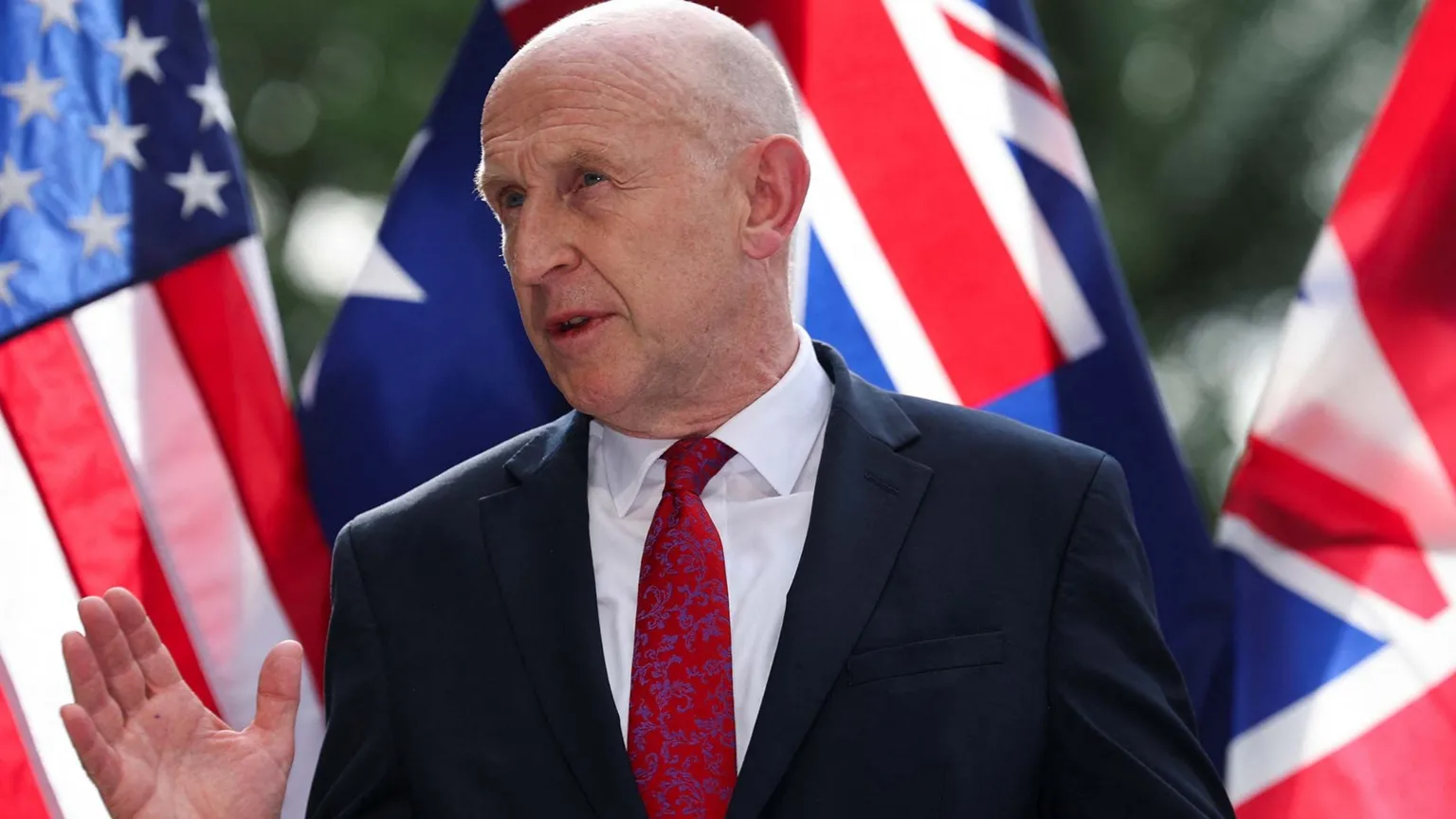
The resignation of UK Defence Secretary John Healey has triggered political shockwaves in London, raising fresh questions about the government’s defence spending plans and its ability to meet rising military commitments.

Healey, widely regarded as a loyal and disciplined figure within the Labour Party and the government, had not previously shown signs of public dissent. Unlike some of his predecessors, he was known for maintaining strict alignment between his private concerns and public statements, avoiding open criticism of colleagues or the Treasury.
However, growing internal pressure over the pace of Britain’s defence investment appears to have strained that loyalty.
At the center of the dispute was the government’s failure to move quickly enough on increasing defence spending to match rising international expectations and commitments, particularly amid concerns about European security readiness and ongoing global conflicts.

Reports suggest that allies within government, as well as the defence industry, had been increasingly questioning when political promises would be backed by substantial financial commitments.
Healey himself had initially supported plans to raise defence spending to 2.5% of GDP ahead of schedule, but senior defence officials reportedly viewed the overall funding approach as insufficient to meet operational demands.
Tensions escalated as discussions around a longer-term target of 3% of GDP became central to internal negotiations. While the government has expressed ambition toward that benchmark, no clear timeline was agreed.
According to defence sources, the Treasury’s proposed settlement included an additional £13.5 billion over four years. However, adjustments and accounting methods meant the real increase could be closer to £10 billion, a figure critics argue falls far short of what is required to avoid capability gaps.

Healey is said to have pushed for significantly higher investment, arguing that current commitments—especially those related to support for Ukraine, regional security obligations, and deterrence operations—were placing increasing strain on the armed forces.
He ultimately concluded that the proposed funding trajectory, which would have increased defence spending only marginally from 2.6% to 2.68% of GDP by 2030, was inadequate for national security needs.
His resignation letter reportedly highlighted concerns that the settlement would effectively result in cuts in real terms once operational demands were accounted for.

However, the decision has also sparked criticism. Some officials within the Ministry of Defence argue that budget pressures were already well known and long-standing, stretching back across previous administrations. Questions have also been raised about whether expectations for defence expansion were realistic given fiscal constraints.
Despite these criticisms, Healey’s departure marks a significant moment for the government, removing a senior figure widely seen as steady and reliable during a period of heightened global instability.
Analysts say the resignation may expose deeper tensions within government over defence priorities, fiscal discipline, and international obligations, particularly as geopolitical risks continue to rise.
While the political impact on the prime minister is still unfolding, the situation has intensified scrutiny of the UK’s long-term defence strategy and its ability to align strategic ambitions with available funding.




