

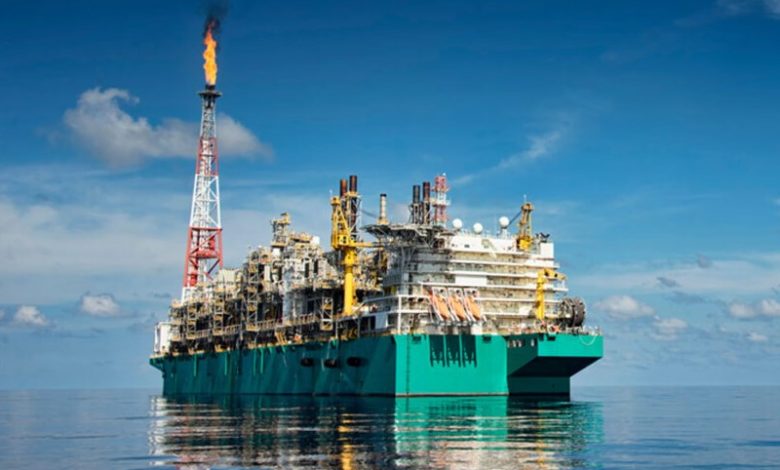
French engineering company GTT has been selected by Samsung Heavy Industries (SHI) to design the cryogenic LNG storage tanks for Delfin FLNG 1, the first floating liquefied natural gas (FLNG) export facility planned for deployment in the United States.
The project is being developed by Delfin Midstream for offshore Louisiana and is expected to become the world’s largest floating LNG facility, with an annual production capacity of 4.4 million tonnes of liquefied natural gas.

The vessel will be equipped with eight cryogenic storage tanks capable of holding a combined 180,000 cubic metres of LNG, using GTT’s proprietary Mark III Flex membrane containment technology.
GTT Chief Executive Officer François Michel described the project as a landmark development that will strengthen global LNG supply while demonstrating the company’s advanced membrane technology for large-scale offshore energy projects requiring high standards of safety, reliability, and performance.

The contract follows Delfin Midstream’s decision in June to issue Samsung Heavy Industries a $2.9 billion notice to proceed with construction of the facility, which is expected to be completed in 2030.
Beyond its involvement in the U.S. project, GTT is also expanding its presence in Africa, where floating LNG technology is increasingly seen as a practical solution for developing offshore natural gas resources.
The company previously secured a similar contract from Samsung Heavy Industries to design LNG storage systems for an FLNG project destined for Africa, reinforcing its growing role in the continent’s energy sector.
French engineering firm Technip Energies has also played a major role in Africa’s LNG industry. The company was instrumental in the delivery of Coral South FLNG, Africa’s first deepwater floating LNG project located offshore Mozambique, which began exporting LNG in 2022.
Technip Energies has since been awarded another major contract linked to the proposed Coral North FLNG development, supporting Mozambique’s plans to unlock the significant gas reserves in the Rovuma Basin.

As African countries continue to explore offshore gas development, floating LNG projects are gaining momentum due to their faster deployment and lower costs compared to conventional onshore liquefaction facilities.
Mozambique remains Africa’s leading FLNG market, while Senegal and Mauritania have already begun production at the Greater Tortue Ahmeyim LNG project. Meanwhile, Namibia’s offshore discoveries and Tanzania’s gas reserves continue to fuel expectations for future floating LNG developments.
With global demand for liquefied natural gas remaining strong, particularly across Europe and Asia, French companies are positioning themselves as key providers of the technology and engineering expertise expected to drive Africa’s next phase of LNG development.




