

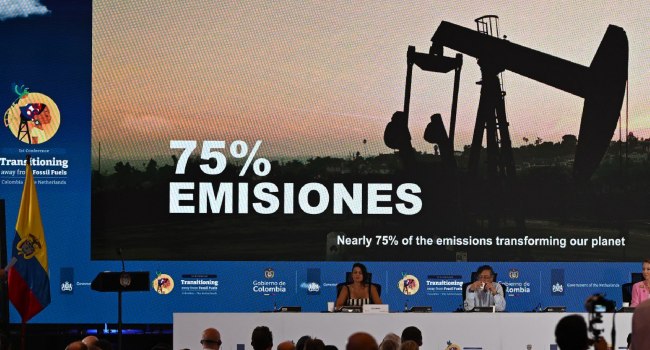
Nigeria has joined around 60 countries in a new round of global discussions aimed at accelerating the phase-out of fossil fuels, as international leaders gather in Santa Marta, Colombia, for talks focused on energy transition and climate action.
The meeting, which began on Tuesday, brings together ministers and climate officials who are pushing for a faster global shift away from oil, gas, and coal. The discussions are being framed not only around climate change but also around energy security and economic stability.

Officials at the conference highlighted that recent global energy disruptions, including tensions linked to the Iran conflict, have exposed the vulnerability of countries heavily dependent on fossil fuel imports and exports. Some participating nations reported rising energy costs and supply challenges.
European Union climate representatives noted that the ongoing crisis has strengthened the argument for reducing reliance on fossil fuels, describing it as both an environmental and economic necessity. Other delegates echoed concerns that fossil fuel dependence is increasingly linked to global instability.

Nigeria is attending alongside other fossil fuel-producing and developing economies, including Angola, Brazil, Canada, Norway, and Australia, as well as coal-dependent nations such as Turkey and Vietnam. However, major emitters like the United States, China, and India are not part of the talks.
The conference follows continued frustration with stalled progress under previous United Nations climate agreements, where countries have struggled to implement commitments to reduce fossil fuel use despite earlier pledges.

Although the talks are not expected to produce binding agreements, participants are working on policy recommendations aimed at guiding countries toward cleaner energy systems, including reforms to fossil fuel subsidies and increased investment in renewable energy.
Some countries have already begun outlining long-term transition plans, with France, for example, presenting a roadmap to gradually phase out coal by 2030, oil by 2045, and gas by 2050 for energy use.

Experts cited during the conference warned that global investment patterns still heavily favour fossil fuels over renewable energy, and that the current pace of transition is insufficient to meet international climate targets.

Scientists also reiterated concerns that global temperatures have already risen significantly and could surpass critical thresholds in the coming years if emissions are not reduced more rapidly.




