

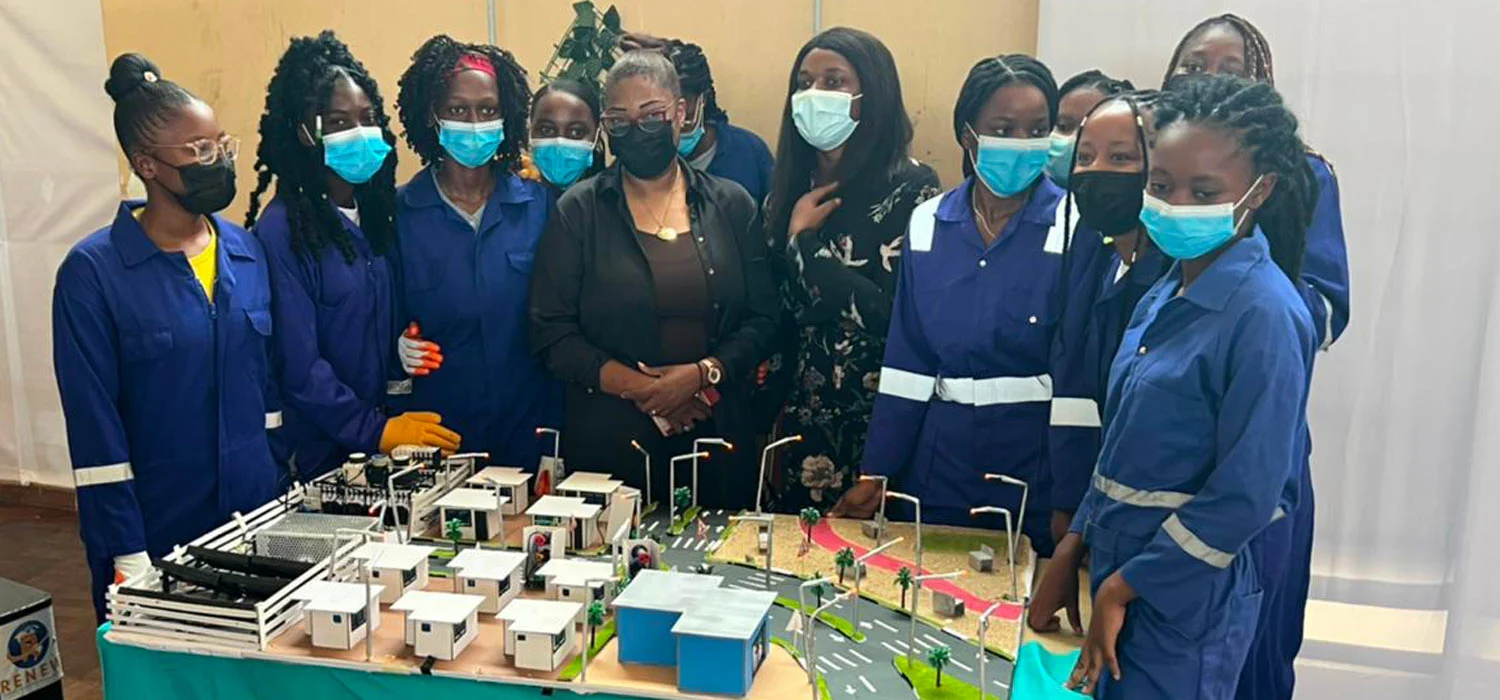
Angola is at a pivotal stage in its development as the country shifts away from decades of dependence on oil revenue and invests heavily in human capital, particularly its young population and women.
At the centre of this transformation is the Science and Technology Development Project (STDP), a $100 million initiative supported by the Government of Angola in partnership with the African Development Bank Group. The programme is focused on strengthening education, research, and innovation as key drivers of long-term economic diversification.

The project aims to develop a new generation of scientists, engineers, and innovators who can sustain economic growth beyond the oil sector, with a strong emphasis on expanding opportunities for women in science and technology.
A key example of its impact is the postgraduate scholarship scheme, which has supported 161 Angolan students studying abroad at institutions such as the University of Lisbon in Portugal and the University of São Paulo in Brazil. Women currently represent 21% of beneficiaries, with efforts underway to increase this figure in future phases of the programme.

Beyond higher education, the initiative has also focused on secondary school support. In regions such as Bié Province, where female participation in STEM education has historically been low, a targeted scholarship programme for vulnerable girls has provided monthly stipends to 1,204 students between 2019 and 2024, far exceeding the original target of 125 beneficiaries.
An evaluation of the programme revealed significant social and academic benefits. A large majority of participants reported improved access to learning materials and better household food security, while many said the support had reshaped their aspirations. A significant portion of beneficiaries have since progressed to higher education.
The programme has also invested in infrastructure development, equipping dozens of science laboratories in secondary schools, training over 1,350 educators and academic staff, and funding over 70 research projects, with women accounting for nearly a third of research awards.

Officials say the initiative demonstrates that investing in women’s education and scientific training is not only socially impactful but also a key strategy for driving sustainable economic diversification in Angola.




