

Several homegrown companies in Ivory Coast are expanding their presence across key industries, challenging the long-standing dominance of multinational firms in sectors such as petroleum, digital banking and cosmetics manufacturing.
Rather than replacing global corporations, these local businesses are carving out market share by responding quickly to customer needs, investing in local production and leveraging a deep understanding of the domestic market.

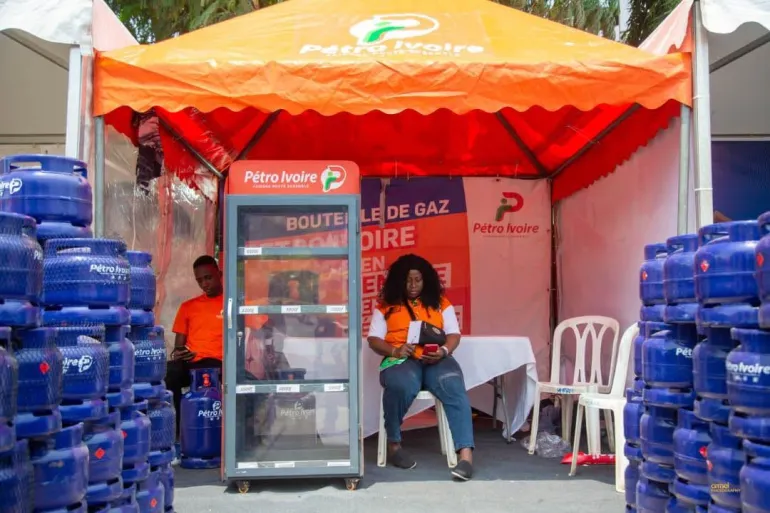
One of the standout examples is Petro Ivoire, which entered the country’s petroleum industry in 1994 when international oil companies controlled most of the sector. The company has since grown into Ivory Coast’s largest locally owned fuel distributor and is now ranked behind only TotalEnergies and Shell in the national market.
Its leadership attributes the company’s success to its ability to make faster business decisions and combine local expertise with internationally accepted standards. Petro Ivoire has also expanded into the butane gas market and is investing in electric vehicle charging infrastructure as the country’s energy landscape evolves.
In the technology sector, digital banking platform Djamo has emerged as another successful local enterprise. Since launching in 2020, the company has attracted more than two million customers and thousands of small and medium-sized businesses through its mobile-based financial services.

Djamo’s founders said one of their biggest challenges was convincing international investors that francophone West Africa could produce scalable technology companies. By highlighting the region’s economic stability and growing digital adoption, the company has continued to attract investment and expand its operations.
The cosmetics industry has also witnessed the rise of Kaira Holding, a company that started in a small apartment in Abidjan with limited capital. Today, the business exports beauty and personal care products to 32 countries across Africa, Europe and the Middle East.
Its founder credited the company’s growth to investments in local manufacturing, packaging and production, which have reduced dependence on imported materials while improving competitiveness.

The success stories of Petro Ivoire, Djamo and Kaira Holding reflect a broader shift in Ivory Coast’s private sector, where locally owned businesses are increasingly positioning themselves to compete regionally and internationally through innovation, value addition and strategic investment.




