

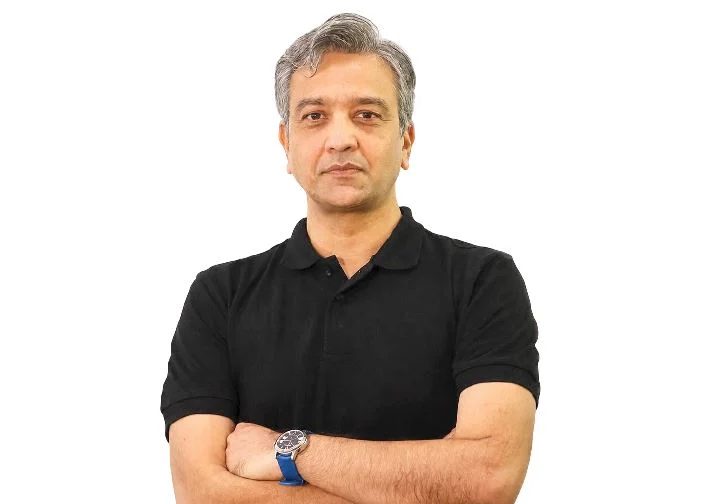
Spiro’s Chief Executive Officer of Mobility, Kaushik Burman, has highlighted how the company is aligning its operations with Nigeria’s industrialisation agenda, focusing on local manufacturing, energy transition financing, and the development of battery value chains, alongside its $215 million battery recycling investment.
Burman described Spiro as Africa’s largest electric mobility company, noting that it operates across seven countries, including Nigeria, with over 100,000 electric motorcycles deployed, more than 2,500 battery-swapping stations established, and over 30 million battery swaps completed.

He explained that Spiro is not just a motorcycle provider but a full energy and technology infrastructure company supporting large-scale electric mobility adoption. According to him, the company’s approach in Nigeria prioritises local value creation through assembly operations, workforce training, and investment in recycling infrastructure rather than relying on fully imported products.
Speaking on Nigeria’s mineral potential, particularly lithium, Burman noted that the country presents strong opportunities for building a domestic battery value chain. He added that while battery cells are currently sourced from China, the company is exploring greater localisation of production in Africa, including possible future cell manufacturing.

He also emphasised the need for supportive policies that encourage domestic value addition over raw material exports, alongside improved access to financing to attract large-scale investment into the sector. He said such measures could help accelerate the growth of a fully integrated battery industry in Nigeria.
Burman further explained that Spiro’s $215 million funding package is aimed at strengthening its manufacturing and industrial footprint across Africa, including Nigeria, with increased local assembly and production of components already underway.
He noted that the company’s recycling operations are established, while expansion into deeper manufacturing and component production is the next phase of growth. According to him, Nigeria remains a strategic market due to its strong demand for two- and three-wheel mobility solutions.

On Nigeria’s broader industrial policy, he stated that reducing dependence on fuel imports and building local production capacity align closely with Spiro’s mission. He pointed out that Africa’s heavy reliance on imported fuel creates economic strain, and electric mobility offers a more sustainable alternative.
Burman added that meaningful policy support, including incentives for local production, improved access to long-term financing, and stronger public-private partnerships, would accelerate EV adoption in Nigeria. He stressed that electric mobility is already commercially viable and no longer a technology challenge.

He further explained that battery-swapping infrastructure requires significant capital investment but can be made sustainable through innovative financing structures that treat batteries as infrastructure assets. According to him, combining equity and climate-focused debt has helped attract long-term institutional investors.
Addressing financing challenges in Nigeria, he said electric mobility helps reduce lending risks by enabling asset tracking and daily repayment models through swap stations. This structure, he explained, can significantly reduce interest rates and improve access to credit for riders and operators.
Burman also confirmed that Spiro is engaging with financial institutions in Nigeria, including development finance organisations and commercial banks, while also forming partnerships with mobility companies to expand EV adoption.




