

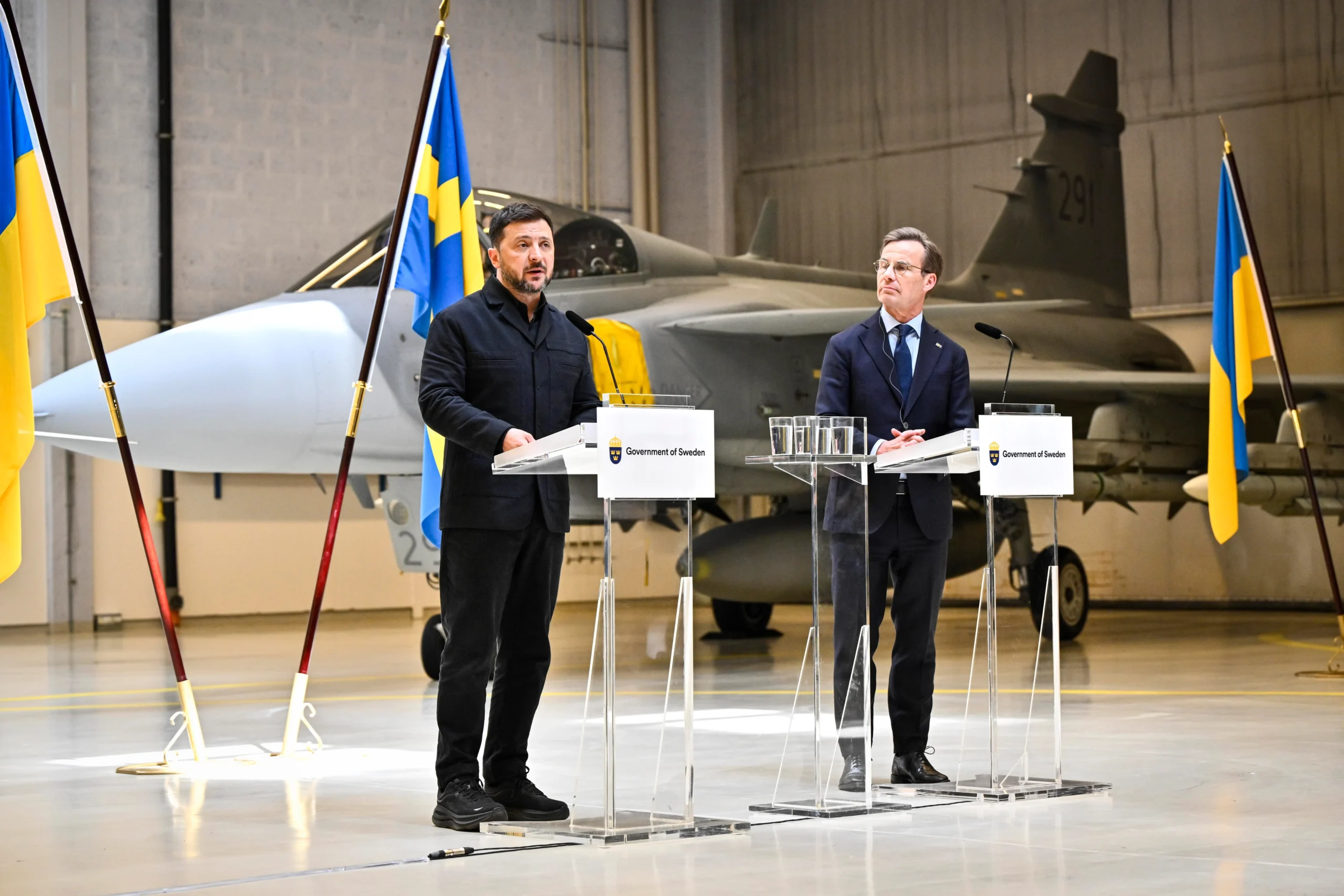
Ukraine is set to strengthen its air capabilities after confirming plans to make Sweden’s Gripen fighter jets a central part of its future air force, in what could mark the aircraft’s first real combat test against Russia.

Under the agreement, Ukraine has allocated €2.5 billion from a wider €90 billion European Union loan to purchase 20 new Gripen E fighter jets. Sweden is also expected to donate 16 older Gripen models, significantly boosting Ukraine’s fleet as it continues its war effort.
President Volodymyr Zelensky described the deal as a “new chapter” for Ukraine’s air defence, following discussions with Swedish Prime Minister Ulf Kristersson. The agreement could potentially expand to as many as 150 aircraft over time.
The Gripen, developed by Saab, is known for its ability to operate in difficult conditions, including from dispersed locations such as highways and improvised airstrips. This makes it particularly suitable for Ukraine’s wartime environment, where traditional airbases remain vulnerable to attack.

Military experts say the aircraft is designed for flexibility, rapid turnaround, and low operating costs compared to other Western fighters like the F-35. However, analysts also note that it lacks stealth capabilities and heavy payload advantages, meaning it will not by itself change the overall balance of air superiority in the conflict.
Despite these limitations, the jet’s advanced missile systems, including long-range air-to-air weapons, are expected to help Ukraine push Russian aircraft further from the front lines and reduce the effectiveness of glide-bomb attacks.

Production capacity remains a challenge for Saab, which currently builds around 15 aircraft annually, though it plans to increase output. The company has also indicated possible future collaboration with Ukraine on maintenance and local support infrastructure.

The Gripen program, once criticized in its early years for high costs and technical issues, has grown into a key export success for Sweden. Defence officials say Ukraine’s adoption of the aircraft could further boost international interest in the system.




