

Education reforms target youth employment, university stability and opportunities for disadvantaged children; Germany, Switzerland and Rwanda offer lessons for Nigeria
November 4, 2026
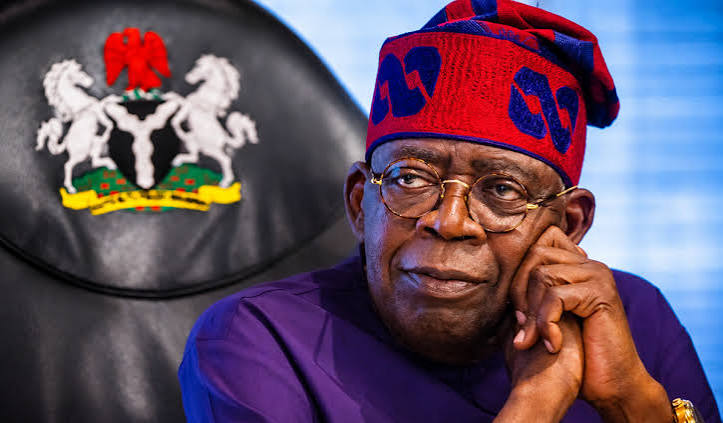
President Bola Ahmed Tinubu’s administration has placed education, vocational training and youth empowerment at the centre of its development agenda, with the All Progressives Congress Presidential Campaign Council reporting ₦372.62 billion in student-loan disbursements, 156,446 verified technical trainees and more than one million previously out-of-school children returned to learning.
In a November 4 press statement signed by Dr Dele Alake, spokesperson of the APC Presidential Campaign Council, the Council said the achievements were documented in the Federal Ministry of Education’s Nigerian Education Sector Renewal Initiative (NESRI) report.
The interventions span basic education, teacher development, girls’ schooling, technical colleges, tertiary financing, medical training, digital learning and research. Together, they reflect an attempt to move education beyond certificates towards skills, opportunity and economic participation.
President Tinubu reinforced the policy’s human dimension on Wednesday, recalling how he drove a taxi and undertook other jobs to finance his university education in the United States.
“The circumstances of a child’s birth should never determine the limits of their ambition. Our responsibility is to give every Nigerian child a fair chance to fulfil their potential,” the President declared.
STUDENT LOANS: FINANCIAL BARRIERS UNDER ATTACK
According to the APC-PCC, the Nigerian Education Loan Fund (NELFUND) has processed 1,659,853 applications and disbursed ₦372.62 billion across 319 tertiary institutions. The breakdown comprises ₦192.89 billion for institutional fees and ₦179.73 billion in upkeep allowances.
The initiative seeks to help students continue their education despite financial pressures. Its longer-term significance will depend on transparent administration, sustained funding and the ability of beneficiaries to complete their studies.
The Council also reported that the Tertiary Institutions Staff Support Fund has disbursed ₦28 billion to 15,000 workers in 153 public institutions, offering assistance for housing, healthcare, transportation and education.
TVET: BUILDING SKILLS, ENTERPRISES AND JOBS
Technical and Vocational Education and Training (TVET) is emerging as a major pillar of the administration’s human-capital strategy.
The programme has attracted more than 2.8 million applications, with 156,446 verified trainees receiving free instruction, monthly stipends and start-up support, according to the statement. The Council reported ₦65.7 billion disbursed to trainees and ₦30.2 billion to training centres.
Thirty-eight technical colleges have been rehabilitated, while free technical education now covers tuition, boarding, textbooks and uniforms for eligible students.

This approach recognises that economic opportunity cannot depend exclusively on university degrees. Electricians, welders, technicians, mechanics, agricultural processors, digital specialists and skilled construction workers are essential to industrial growth.
The strongest vocational systems, however, do more than enrol trainees: they connect training to employers, apprenticeships, recognised qualifications and sustainable livelihoods.
For Nigeria, this means closer collaboration among training centres, manufacturers, construction companies, agricultural enterprises and technology businesses. Apprenticeships should provide genuine workplace experience, while start-up assistance must be accompanied by mentoring, market access and business support. Without these links, certificates alone will not resolve unemployment.
LESSONS FROM GERMANY, SWITZERLAND AND RWANDA
Nelson Mandela’s celebrated observation that “Education is the most powerful weapon which you can use to change the world” captures the developmental purpose of skills acquisition. Education can expand individual opportunity, but practical training must also respond to the demands of the economy.

Germany’s dual-training model combines vocational schooling with practical apprenticeships in businesses, helping young people acquire skills employers actually need. Switzerland similarly integrates classroom education with workplace training; roughly two-thirds of its young people choose vocational pathways, demonstrating that skilled careers need not begin with university degrees.
Rwanda provides a particularly relevant African example. According to the World Bank, its Priority Skills for Growth programme supported nearly 24,000 young people and workers through industry-linked training between 2017 and 2024. Within nine months, 82% of graduates were employed or self-employed, while 39% of self-employed graduates had created at least one additional job.
Rwanda’s experience offers a practical lesson for Nigeria: vocational programmes become transformative when training responds to actual market demand and graduates can progress into paid work or viable enterprises. Nigeria should measure TVET success not only by enrolment and spending, but also by graduate employment, business survival and income growth.
ONE MILLION CHILDREN RETURN TO LEARNING
The Council said the Better Education Service Delivery for All programme had returned over one million out-of-school children to learning, trained 1,400 Tsangaya teachers and established 200 bilingual centres across 17 northern states.

It reported that the Adolescent Girls Initiative for Learning and Empowerment had reached 7.19 million girls, with 3.7 million enrolled in secondary schools, while more than 10,000 schools benefited from facility improvements.
The Federal Government also secured $552 million for HOPE-EDU, a programme targeting 29 million children, over 500,000 teachers and 65,000 public schools. These are ambitious coverage targets, not figures representing children or teachers already reached.
For vulnerable families, the impact of these programmes will be judged by regular attendance, learning quality, school completion and the ability of girls to remain in education.
The challenge is especially urgent in communities where poverty, displacement and insecurity interrupt schooling. Bringing a child back into a classroom is an important first step; keeping that child there requires trained teachers, safe facilities, appropriate learning materials and consistent support for parents.
TEACHERS, UNIVERSITIES AND MEDICAL EDUCATION
The administration has introduced a revised national curriculum restoring Nigerian History and strengthening Civic and Heritage Studies, alongside renewed national learning assessments.

Under EduRevamp, 53,553 teachers have registered, and 51,794 entered the first cohort of the Accelerated Teacher Professionalisation Pathway. Supported by ₦2 billion, the initiative aims to reach 250,000 teachers by 2027.
The APC-PCC also highlighted a new agreement with the Academic Staff Union of Universities providing for a 40% increase in academic staff remuneration and improved welfare arrangements, intended to support more predictable academic calendars.
President Tinubu expressed that ambition plainly: “A four-year course must take four years.”
In medical education, the Council cited ₦110 billion for rehabilitating federal medical schools. The number of institutions requires clarification: the Council’s statement refers to 18, while the President’s separate November 4 communication specifies 24. The investment figure is therefore retained here without adopting either institutional count.
The Council additionally reported increased nursing enrolment, support for science and engineering facilities and more than ₦2.5 billion in Student Venture Capital Grants for 45 young entrepreneurs. Its Diaspora BRIDGE initiative has registered 1,141 Nigerian experts abroad to support teaching and knowledge exchange.

FROM REFORM ANNOUNCEMENTS TO REAL OPPORTUNITY
Education Minister Dr Tunji Alausa said the administration’s success should be judged by the difference its interventions make in the lives of children, students, teachers and institutions, rather than expenditure or programme counts alone.
That is the essential test. Student loans must keep learners in school; rehabilitated colleges must produce competent graduates; teacher development must improve learning; and vocational training must lead to employment and enterprise.
The figures published by the APC-PCC describe substantial reported activity, but applications, enrolments, disbursements and completed outcomes are distinct measures. Independent monitoring of completion, placement and learning standards will determine the reforms’ enduring value.

NATIONAL PATRIOTS COMMEND TINUBU’S EDUCATION REFORMS
The National Patriots commend President Bola Ahmed Tinubu for prioritising education, vocational skills and youth empowerment. Student loans, technical training and expanded educational access demonstrate a commitment to developing Nigeria’s human capital. Experiences from Germany, Switzerland and Rwanda show how practical skills can strengthen employment and enterprise. Nigeria must translate these investments into sustainable jobs, productivity and national prosperity.
Princess Gloria Adebajo-Fraser MFR.
President, The National Patriots.
Member,APC-PCC Strategic Communications Team.