

Viral Cleric’s Anti-Christian Remarks Spark Alarm as National Patriots Demand Prob
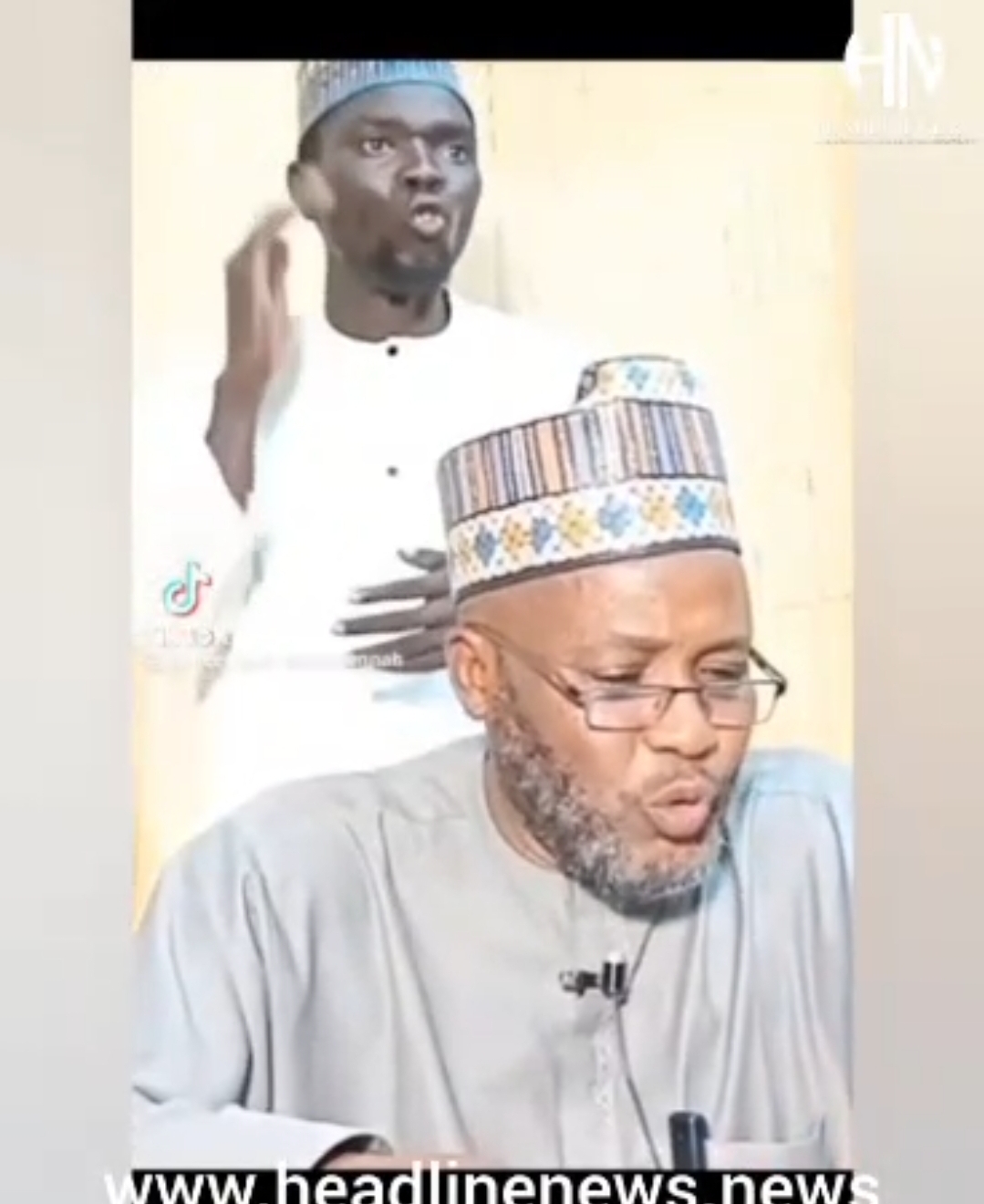
A disturbing viral video purportedly showing a cleric advocating the removal of Christians from public and private employment in Katsina State and across Nigeria’s North-West has raised serious questions that security agencies cannot afford to ignore.
Headlinenews.News was provided with the video and requested to draw public attention to its contents. While this newspaper has not independently established the speaker’s identity or authenticated the full circumstances and date of the recording, the statements attributed to him are sufficiently grave to warrant immediate investigation.
In the account accompanying the footage, the speaker allegedly declared that, if elected governor of Katsina State, he would sack Christian civil servants, pressure private-sector employers, including banks, to remove Christian employees and replace them with Muslims.
He is further alleged to have advocated extending such a policy across the North-West and criticised governors for failing to make their states exclusively Muslim.
If the video is authentic and the remarks have been accurately represented, this goes far beyond religious or political disagreement. It amounts to advocacy for institutional discrimination against Nigerian citizens solely because of their faith.
That is a dangerous line that Nigeria must never permit anyone to cross.
The National Patriots Movement of Nigeria strongly condemns religious intolerance, whether directed against Christians, Muslims or adherents of any other faith, and calls on the Nigeria Police Force and other appropriate security agencies to identify and summon the individual for questioning, authenticate the recording and determine whether any offence under Nigerian law has been committed.
Nigeria’s constitutional order is unequivocal about religious discrimination.
Section 10 of the 1999 Constitution provides that neither the Government of the Federation nor that of a state shall adopt any religion as a state religion. Section 38 guarantees freedom of thought, conscience and religion, while Section 42 protects Nigerians against discrimination, including on grounds of religious affiliation.
A government policy deliberately removing citizens from public employment because they are Christians—or Muslims—would therefore collide directly with fundamental constitutional protections.
Nigeria is a federation of citizens, not a collection of religious enclaves.
Katsina belongs to Nigerian citizens who lawfully live there, irrespective of religion. The same principle applies in Lagos, Kano, Enugu, Sokoto, Rivers, Borno and every other state.
No Nigerian should have to change his or her religion to obtain a government job, work in a bank, operate a business or enjoy the protection of the state.
And this principle must work both ways.
The National Patriots would equally condemn any Christian cleric demanding that Muslims be dismissed from government employment or driven from predominantly Christian communities. Religious tolerance cannot become a principle defended only when one’s own faith is threatened. It must protect everyone.
Nigeria already carries too many ethnic, religious and security fault lines to permit inflammatory religious rhetoric to become an instrument of political mobilisation.
Words matter. Public declarations portraying fellow citizens as people who should be expelled, deprived of employment or excluded from society because of their faith can deepen suspicion between communities and potentially provoke retaliation.
Freedom of expression is fundamental, but it cannot provide political legitimacy for unconstitutional religious discrimination.
The authorities should therefore obtain the original recording, establish its authenticity and context, independently verify any translation, identify the speaker and allow him to respond to the allegations.
This must not become a religious witch-hunt, and nobody should be pronounced guilty merely on the strength of a social-media caption. But neither should potentially dangerous rhetoric be ignored because investigating it may be politically uncomfortable.
If investigators establish that the remarks were genuinely made and applicable laws were breached, the authorities should proceed firmly and strictly according to law.
Political parties must also reject aspirants seeking electoral advantage by demonising Nigerians of another faith. Nigeria’s political competition should revolve around security, education, healthcare, infrastructure, jobs and economic development—not which religion can drive another out of a state.
Respected Muslim and Christian leaders should similarly challenge extremist rhetoric before silence allows it to acquire legitimacy.
Islam must not be equated with extremism, just as Christianity cannot be judged by the excesses of individuals claiming to speak in its name. Millions of Nigerian Muslims and Christians have lived, worked and raised families alongside one another for generations.
Nigeria has paid too high a price for religious and ethnic division to treat rhetoric of exclusion casually.
A Christian in Katsina remains a Nigerian. A Muslim in Enugu remains a Nigerian. Their constitutional rights do not disappear because their faith happens to be a minority where they live.
The National Patriots therefore calls on government and security authorities to send an unmistakable message: Nigeria will protect freedom of religion, but it must never permit religion to become a weapon for stripping citizens of their rights, livelihoods or place in their own country.
Religious leaders should preach faith. Politicians should compete for votes. Governments must protect every citizen.
Nobody should be allowed to weaponise religion against the unity of Nigeria.
With Nigeria currently designated by the United States as a Country of Particular Concern (CPC) over religious-freedom issues, security agencies cannot afford to ignore inflammatory religious rhetoric capable of deepening tensions and damaging the country’s international standing.
Dr. Imran Khazaly.
Headlinenews.news Special Investigative Desk



