

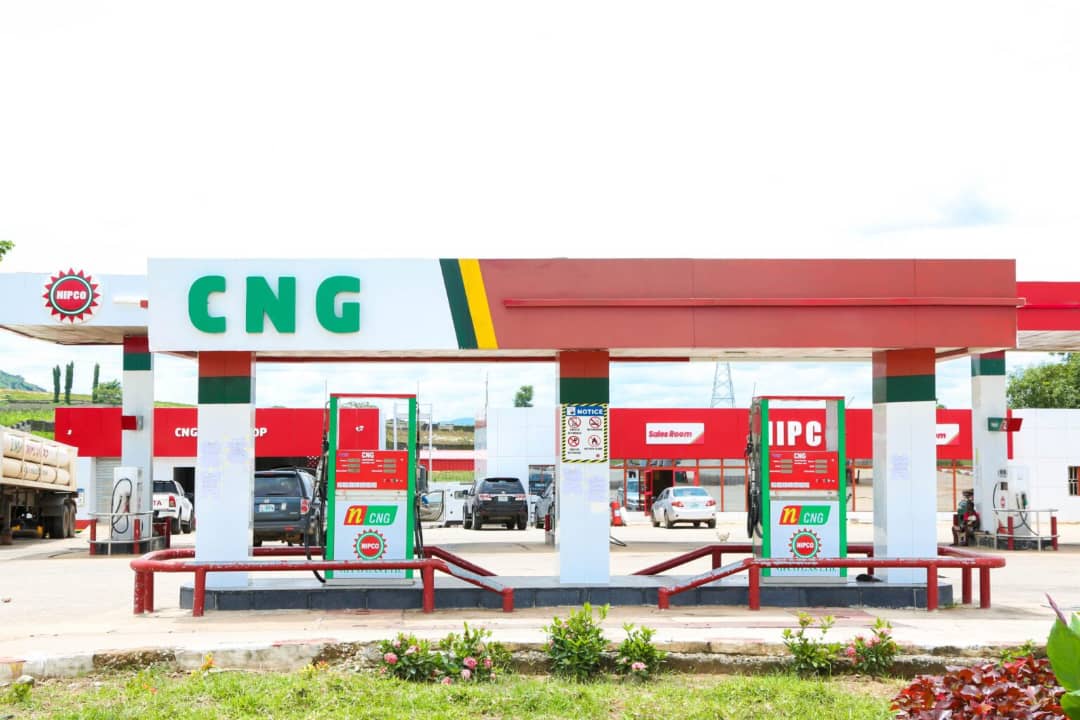
The Federal Government has announced plans to establish 2,322 Compressed Natural Gas (CNG) refuelling stations across Nigeria by 2027 as part of efforts to expand alternative fuel infrastructure and promote cleaner transportation.
The Executive Chairman of the Presidential Initiative on Compressed Natural Gas and Electric Vehicles (PICNG), Ismaeel Ahmed, disclosed this at the Nigerian Oil and Gas Midstream and Downstream Summit in Lagos, where he highlighted progress made in the sector.

Represented by agency official Olayinka Rufai, Ahmed said Nigeria has made rapid progress in CNG adoption within less than three years, with availability expanding from just one state at inception to 24 states currently.
He noted that over 100,000 vehicles have already been converted to run on CNG, most of them commercial vehicles, in a bid to reduce transport costs for ordinary citizens following fuel subsidy removal.

According to him, the initiative has also attracted more than $1 billion in investments into the CNG mobility sector, alongside the establishment of infrastructure including refuelling stations, compression facilities, and conversion centres.
Ahmed revealed that Nigeria currently has 72 active CNG refuelling stations, with 175 more under development, as well as 28 operational compression stations and 65 more being built to support gas distribution.
He also stated that over 350 conversion centres have been established nationwide, alongside the training and certification of more than 5,600 technicians to support maintenance and safety standards in the sector.

In addition, the programme has deployed over 4,000 CNG-powered tricycles, most of which were locally assembled, further boosting local manufacturing and job creation.
He added that CNG remains significantly cheaper than petrol, making it a more affordable transport fuel option for Nigerians.

The initiative is also expanding into electric vehicle deployment, with pilot EV projects and charging infrastructure planned alongside CNG expansion.
By 2027, the government aims to achieve 2,322 CNG stations, 3,000 conversion workshops, 1 million vehicle conversions, and the creation of over 375,000 direct and indirect jobs.




