

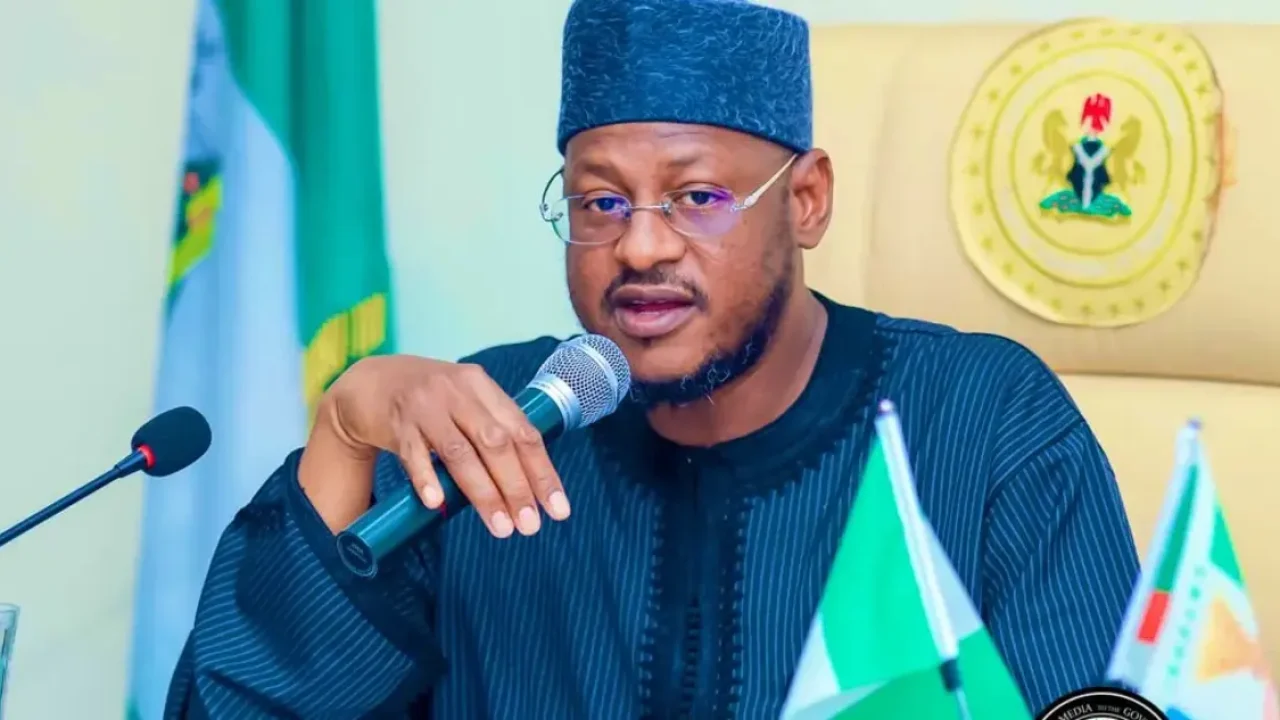
The Governor of Katsina State, Dikko Umar Radda, has renewed his call for armed groups operating in the state to abandon violence, surrender their weapons, and return to peaceful civilian life, as part of ongoing efforts to restore stability in the region.

He said his administration is expanding reintegration and recovery programmes aimed at supporting communities affected by years of insecurity, while also opening channels for dialogue with those willing to renounce banditry.
The governor made the appeal during the inauguration of a new Internally Displaced Persons (IDPs) housing estate in Jibia Local Government Area, where he emphasized that opportunities for repentance and reintegration remain available.

The housing project, developed under a regional recovery initiative in partnership with international development support, includes 152 residential units for displaced families, along with facilities such as a climate resilience hub, veterinary clinic, entrepreneurship centre, and a solar-powered mini-grid designed to support local livelihoods.
Radda directly addressed armed groups hiding in forests across the state, urging them to choose peace and family life over violence, stressing that the government remains open to dialogue for those ready to surrender.

He also highlighted that insecurity in the North-West is driven by factors such as poverty, displacement, climate pressures, and youth unemployment, noting that military action alone cannot fully resolve the crisis without community involvement.
The governor called on traditional leaders, religious figures, women’s groups, and youth associations to strengthen intelligence sharing and early conflict mediation to prevent further escalation of violence.

As part of the resettlement programme, he announced a ₦200,000 grant for each beneficiary household in the housing scheme to help them restart their lives and rebuild their livelihoods.
Officials involved in the project explained that the housing units were designed with local living conditions in mind, featuring basic family-friendly facilities to support rural resettlement.
Local authorities in Jibia described the initiative as a major step toward restoring dignity and stability for families displaced by insecurity, while international development partners praised the effort as a people-centred recovery model focused on rebuilding lives and strengthening resilience.




