

The Federal Ministry of Health and Social Welfare has announced that Nigeria has strengthened its national preparedness and response systems following concerns over the possible spread of the Bundibugyo ebolavirus (BEBOV), which has been reported in parts of East and Central Africa.

In a statement released on Tuesday in Abuja and signed by the Assistant Director of Press and Public Relations, Ado Bako, the Ministry said surveillance and border health measures across the country have been reinforced to reduce the risk of cross-border transmission.
Authorities, however, emphasized that Nigeria has not recorded any confirmed case of Ebola Virus Disease at present.

The Ministry explained that, despite the absence of infection within the country, proactive steps have been taken in line with its responsibility to safeguard public health and strengthen national health security.
As part of these measures, official guidelines, advisories, and technical documents have been published on the Ministry’s website to improve awareness and support preparedness among institutions and stakeholders.
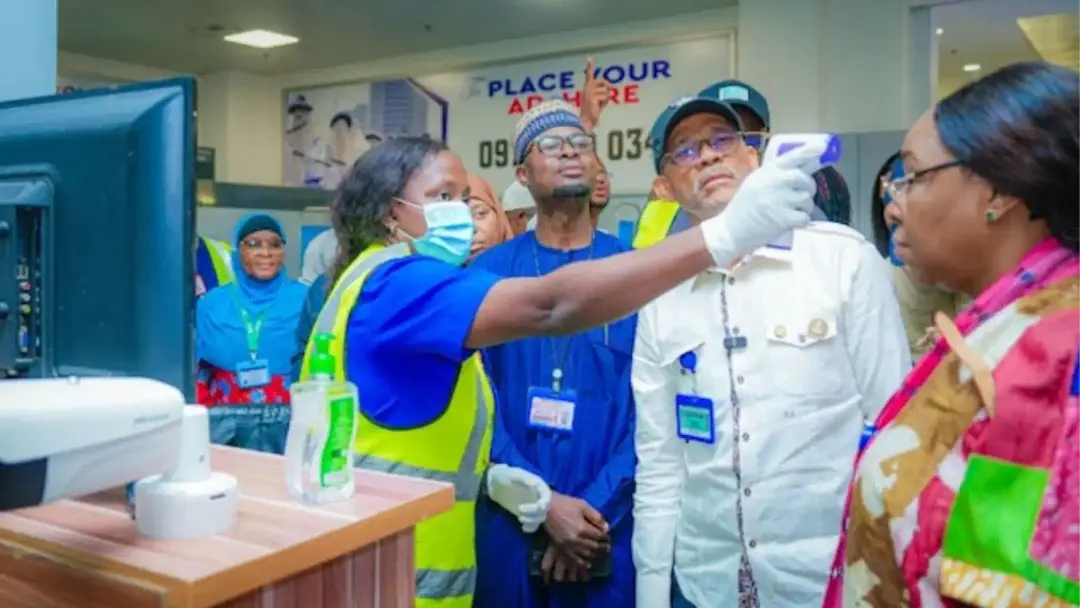
At border entry points, the government has introduced enhanced screening procedures, including temperature checks using infrared scanners and handheld thermometers for arriving travellers.

Incoming passengers are also required to complete health declaration forms and provide travel history details as part of expanded risk assessment protocols. Additional measures include secondary screening, isolation procedures for suspected cases, and closer coordination with immigration and border control agencies.
The Ministry also said disease monitoring systems have been scaled up nationwide through improved Integrated Disease Surveillance and Response activities, alongside stronger community-based surveillance networks.

Health authorities are currently monitoring and verifying alerts and reported cases while conducting continuous risk assessments to guide response actions.
Emergency response structures have been activated, including Public Health Emergency Operations Centres and the deployment readiness of Rapid Response Teams at both national and sub-national levels.
Infection prevention and control measures have also been reinforced across health facilities, with ongoing training provided for healthcare workers and frontline responders.

Hospitals and clinics have been advised to remain vigilant, maintain strong screening procedures, and promptly isolate suspected cases while following established reporting guidelines.
The Ministry urged Nigerians to remain calm, avoid misinformation, and rely only on verified updates from official public health sources.
It further advised the public to maintain good hygiene practices, avoid contact with bodily fluids of sick individuals, and refrain from consuming bushmeat from unverified sources.




