

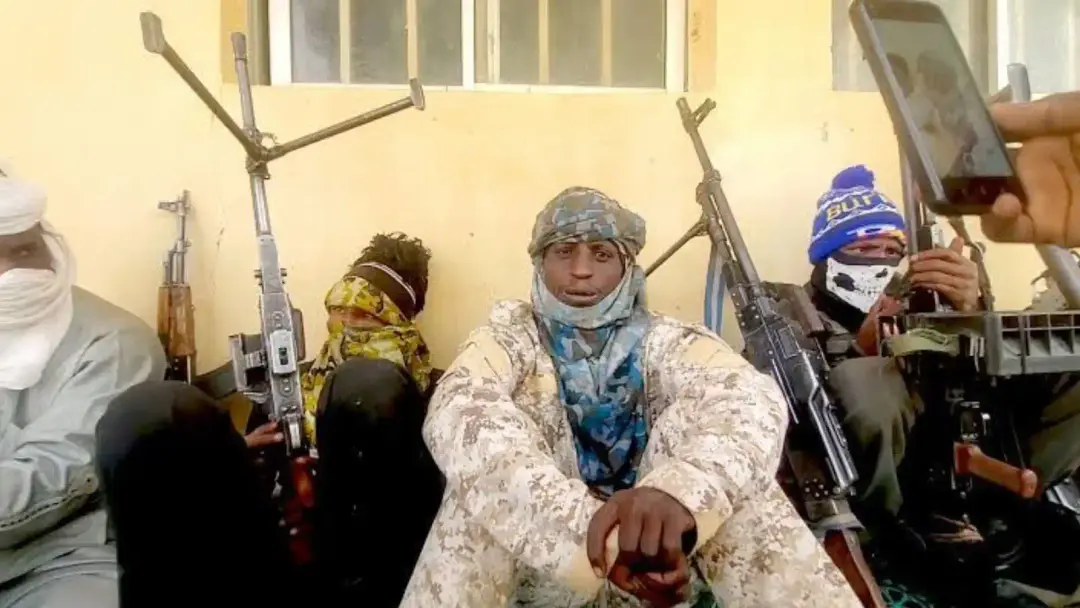
A notorious bandit leader, Bello Turji, has reportedly claimed responsibility for recent attacks on security operatives in parts of Sokoto and Zamfara States while also expressing willingness to enter into dialogue with the Nigerian government.
The claim was made in a video circulating on social media, allegedly recorded on June 20, 2026, in which a masked man believed to be Turji appeared alongside armed individuals dressed in military-style camouflage.

Speaking in Hausa, the speaker referenced ongoing clashes in parts of the North-West, alleging that some communities had been targeted and livestock seized in areas such as Shinkafi in Zamfara State and Sabon Birni in Sokoto State.
He claimed that his group carried out retaliatory attacks in response to what he described as aggression against their communities, insisting that their actions were justified within the context of the conflict.

The speaker also indicated openness to peace talks with the government, stating that the group would consider negotiation if authorities were willing to engage in dialogue. However, he warned that they were prepared for continued armed confrontation if military operations persist.
“If the government is ready for negotiation, we are also ready for negotiation,” he said, adding that his fighters were prepared for further conflict if necessary.

The video emerged shortly after a deadly ambush along the Isa–Bargaja axis in Isa Local Government Area of Sokoto State, where suspected armed groups reportedly attacked security personnel responding to a distress call. Local sources claimed that an improvised explosive device detonated during the operation, resulting in multiple casualties, though official confirmation is still pending.
Security reports also suggest increased activity by armed groups in border communities between Sokoto and Zamfara States, including alleged mobilisation and training exercises.
Bello Turji remains one of the most wanted figures linked to violent banditry in Nigeria’s North-West, with a long history of attacks across Sokoto, Zamfara, and neighbouring states.




