

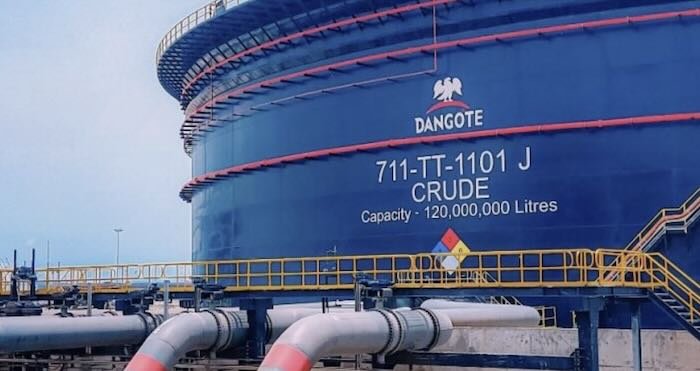
Nigeria is currently at a critical turning point where a commercial disagreement is evolving into a broader reflection of the country’s economic direction and long-term development strategy.
The ongoing tension surrounding the Dangote Refinery is not simply about fuel imports or a dispute between private operators, regulators, and the Nigerian National Petroleum Company Limited (NNPCL). Instead, it reflects a deeper national question about the future structure of Nigeria’s economy.

At the centre of the issue is whether Nigeria, Africa’s largest oil producer, will finally transition into a productive industrial economy that refines its own crude oil and retains value domestically, or continue operating a system that exports raw crude while importing refined products at significant cost.
This debate goes beyond personalities or commercial rivalry. It touches on whether the country is prepared to support domestic industrial capacity or remain dependent on a rent-driven economic model.

Nigeria has faced similar challenges in the past, where ambitious national projects failed to achieve long-term transformation. The automobile industry of the 1970s and 1980s is a key example, with major assembly plants once operating across the country before collapsing due to inconsistent policy, foreign exchange instability, and weak infrastructure. Other once-promising institutions, including railways, telecommunications, textiles, and steel development projects, also declined over time due to poor maintenance, governance issues, and lack of sustained reform.
In the petroleum sector, Nigeria’s long-standing paradox has been its dependence on crude oil exports while relying heavily on imported refined products. This structure has contributed to foreign exchange pressure, subsidy burdens, and limited domestic value creation, despite the country’s vast oil resources.
The Dangote Refinery represents a major attempt to reverse this pattern by establishing large-scale local refining capacity, alongside petrochemical production, fertilizer output, and thousands of direct and indirect jobs. Its emergence has the potential to significantly reduce import dependence and reshape the downstream oil sector.
However, this shift has also intensified debate around market structure and competition. Concerns about monopoly have been raised, but supporters argue that the more pressing issue is not dominance by a single player, but the transition from import dependence to domestic production.
Questions have also emerged around the role of the NNPCL, which holds a minority stake in the refinery while still participating in fuel importation activities. This dual involvement raises concerns about conflicting incentives within the downstream oil sector and the broader energy framework.

At its core, the dispute reflects a structural transition rather than a simple competition issue. It highlights the tension between an import-dependent system and the push toward industrial self-sufficiency.
Nigeria now faces a strategic choice between continuing its traditional model of crude export and fuel importation or supporting a shift toward refining, industrial growth, and local value creation.
The outcome of this transition will play a significant role in determining the country’s long-term economic direction and industrial future.




